
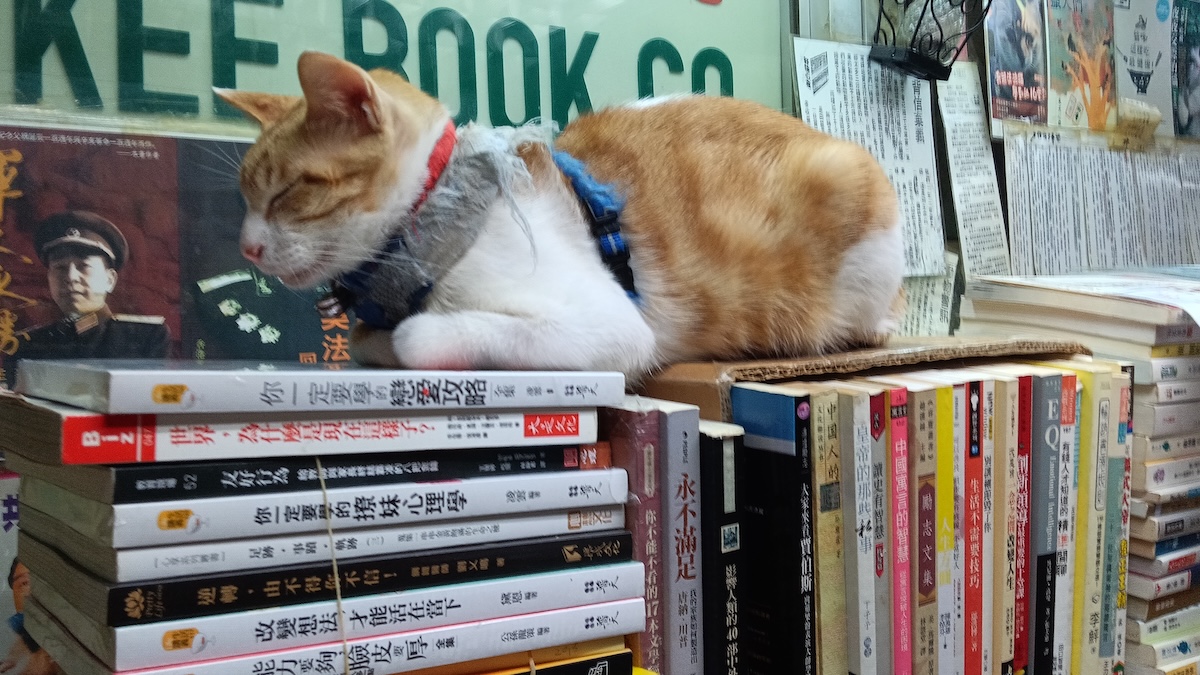
New stocks have IPOs, new tokens have ICOs, so why don’t new books have IBOs—Initial Book Offerings?
This is a question that has puzzled me in recent years as I pondered the innovation of publishing, but I couldn’t find an answer. So I decided to find the answer through action. Through the release of my new work, I invite everyone to build a brand-new IBO publishing model together, seeking a way out for the deteriorating cultural industry.
Three years ago, I conducted my first decentralized publishing experiment, releasing my work Moneyverse. The experiment lasted 34 days, attracted 943 participants, and sold 1,024 e-books priced at $9.90 USD. The detailed figures can be found in the fully public experiment results.
After the experiment, my partners and I continued to explore decentralized publishing. This year, we launched the “third-generation bookstore” 3ook.com. Combined with the upgrade to LikeCoin v3 and the vastly improved usability of Ethereum, we are practicing a brand-new publishing model while making it as simple and fast as mainstream applications.
Now that the infrastructure is ready, I can no longer use “being a creator delayed by entrepreneurship” as an excuse to procrastinate. I might as well go all in. Here, I announce my upcoming new work, Attack on Freedom (進擊的自由), which will go on sale simultaneously via an IBO. As for the content of the book, allow me to keep you in suspense for a moment; this article will start with the concept and philosophy of the IBO.
100 Books
Publishing Attack on Freedom via an IBO model means identifying 100 core readers who will each contribute $100 USD to support and become Co-publishers, witnessing, participating in, and facilitating the birth of this work together. Let me explain these three elements: 100 books, $100 USD, and Co-publishing.
If you view the IBO simply as selling books, participants are buying one of a limited run of 100 copies—exquisitely printed paperbacks numbered #1 to #100, signed and inscribed by the author—along with a synced digital edition. Once the new book is completed and delivered to the 100 IBO participants, the work will be sold publicly as an e-book, but the physical version will not be reprinted.
An IBO can also be understood as a pre-sale—selling “book futures”—and finding co-publishers in the process. Selling the book before it is finished is not because I am lazy, but is the core design of the IBO.
The traditional publishing model involves deciding on the print run for the first edition (e.g., 1,000 copies), shipping them to various online and offline bookstores, and reprinting only if they sell out, repeating the process until sales stall, at which point the work is allowed to go out of print.
Before the internet, or for the few bestsellers today, the model where the market tells publishers how many copies to print could be effective. But in an era ruled by smartphones and AI, where the publishing industry is in a slump, many books stop at the first printing—and even that first printing is a struggle to sell. The model of “print first, find readers later” is obsolete.
Hipsters might think that a book resting in a bookstore playing light music, waiting for a romantic encounter with a reader, is a beautiful scene. I agree. But if you have to consider real-world issues like rent, wages, and inventory, while competing with large e-commerce platforms that have everything and offer perpetual discounts, letting a work meet a reader in the torrent of time and the vast sea of books is a luxury. Or, if you are like me—an author who cannot even meet the prerequisite of having works rest in a bookstore—all that romance is just a fantasy.
Although I promote e-books, I never reject physical books. As long as there are readers who want them, and friends behind the wall who can only read physical copies, I will do my best to satisfy them. However, space, logistics, trees, and attention are precious. Instead of printing a large batch of books, trying to get them onto shelves, and hoping readers slowly discover them until they sell out, the IBO does the opposite: limit the print run to 100 exquisitely printed paperbacks we are confident will sell out, find the readers first, then print the books. The books are sent directly to the readers upon completion, saving the costs originally wasted on shipping, storing, and displaying large quantities of books, and channeling those resources entirely into pre-production.
100 Dollars
Small-batch printing is easy to understand, but why does the IBO use “high pricing”? Is asking for $100 USD price gouging?
First, if you think $100 is too expensive, you can wait for the “normally priced” e-book release after the IBO. I will even, as always, adopt Creative Commons license, allowing readers who cannot afford it or disadvantaged communities to access the knowledge and information through open copies. You are free to decline participation because you think $100 is too expensive, but this is definitely not price gouging.
Furthermore, is selling a book for $10 or $20 really “normal”? Take the 2020 version of the “bestseller” Sociology of Blockchain as an example. It was priced at $20. Over three years, it sold over 3,000 copies. The royalties amounted to about 30,000 HKD, averaging less than 1,000 HKD per month. How “normal” is that? I am not complaining—my situation is actually better than many authors—but I want to point out that the reason pricing and compensation in the publishing industry (and many markets) work is often not because they are “normal,” but because many people are willing to compromise for passion and meaning.
Let’s do the math for the IBO: 100 books at $100 USD equals $10,000. Deducting about 3% for credit card fees and 30% for the sales channel leaves $6,700 (approx. HKD 52,000 or TWD 200,000). To prove that the IBO will not treat the author worse than the traditional model, I, the author, will take 10% ($1,000), which I will use to support future works published via the IBO model (details to come later). The remaining $5,700 goes into editing, typesetting, design, and printing, improving the craftsmanship and quality of the physical book while providing the team with decent returns that reflect their skills and effort.
Regarding consumer decisions, I have always believed that traditional economics oversimplifies human nature by viewing it solely as self-interested. While this explains typical daily consumption, it ignores “irrational” behaviors such as gifting, appreciation, support, and sharing. For creators and documenters, I often want a high-priced product but cannot find one to satisfy that desire. I don’t need “exclusive” articles or videos for premium subscribers, nor do I need various souvenirs. Conversely, I don’t want authors and journalists to “neglect their proper duties” to make merchandise for revenue. I simply want to support them more so the author can focus on creating and niche works can see the light of day; so journalists can record with dedication and marginalized groups can have a voice. Ultimately, both I and the world benefit.
The “high pricing” of the IBO is not greed; it is to satisfy the demand to “give.” This is not a bug; it is a feature. I know I am not part of the mainstream majority, but I am certainly not the only person who thinks this way. I am confident in finding one hundred people who are willing to support me more and help bring Attack on Freedom to life. I even believe that every creator, if they work hard enough, can find a group of true fans—even if the specific number varies—to grow with them and witness their journey.
Co-publishers
The above explains the IBO concept from sales and consumption perspectives. But the deeper meaning of the IBO lies in reshaping readers from mere consumers and receivers into active participants and stakeholders.
By participating in the Attack on Freedom IBO, besides instantly receiving a digital certificate numbered #1 to #100 and receiving the limited physical and digital editions later, you will also receive irregular updates and draft previews from me throughout the writing, editing, and design process. This is a right, not an obligation. If you prefer to read the work all at once after it is finished, I will respect that. But if you wish to provide feedback on editorial direction, design drafts, or trial articles, I will regard you as a Co-publisher and, in the end, print your name on the copyright page of the work under this title.
The Attack on Freedom IBO not only allows the work to be published and the production team to receive reasonable compensation, but it also explores a new publishing model for the cultural industry, striving to continue in an era where AI reigns supreme. If it fails, it is my personal affair; the world has one less book, and at worst, one less author. However, if this IBO publishing experiment succeeds, it belongs to the entire cultural industry. It could bring thousands of excellent works to future generations, benefiting all of humanity.
Are you willing to participate in history’s first IBO and rewrite human history together?
p.s. Congratulations to the SAR government on successfully holding the “perfected” election following the transition “from stability to prosperity.” Although the number of voters “dropped slightly” by over 33,000 to just over 1.31 million, thanks to the electorate base “dropping slightly” by over 334,000, the voter turnout rate “surged” by 1.7%. Meanwhile, invalid votes only “rose slightly” to a historic high of over 41,000 (3.12%), indicating that no voters cast invalid ballots under pressure.
p.p.s. Newsletter open rates continue to fall. To avoid looking too bad, I deleted a large batch of silent subscribers. Even if the number of people opening the emails falls further in this issue, the open rate will appear to have improved. Gratifying news indeed.
Leave a Reply