Search results for: “democracy”

  • LikeCoin 3.0 Green Paper. Introduction

    LikeCoin 3.0 Green Paper. Introduction

    If we consider the creation of the LIKE ERC-20 token on Ethereum on February 8, 2018 as LikeCoin 1.0, then the launch of our own L1 blockchain with the genesis block mined on November 15, 2019 marks the arrival of LikeCoin 2.0. Since then, there have been earth-shaking changes in the LikeCoin ecosystem, the blockchain industry, our home base Hong Kong, and the entire world. As we enter the seventh year, it’s time to discuss the next steps for our community, which I call LikeCoin 3.0.

    To keep pace with the times, LikeCoin must not only innovate technically but also coordinate with DApps, adapt to changes in peripheral tools, adjust the token economy, maintain governance continuity, safeguard stakeholders’ interests, help users adapt, and plan for migration. In the next few articles, I will express my views on various aspects, stimulating discussion within the community to seek consensus and gradually implement changes.

    Before diving into specific recommendations, let’s first examine several key factors that have influenced LikeCoin’s trajectory amidst the technological and social developments of recent years.

    LikeCoin Community

    First and foremost is LikeCoin itself. Since the launch of “2.0” (I’ve never been a fan of this term, it always feels a bit awkward), LikeCoin, as a protocol, has begun to operate on the principles of liquid democracy. Any proposals related to token economics, protocol updates, community funding, etc., must first be discussed in the forum, then formally submitted as proposals. Once approved, they are executed directly on the blockchain. For proposals involving manual intervention, legitimacy is established through the approval of the proposal, authorizing individual stakeholders to execute them.

    Over the past four and a half years, this liquid democracy mechanism has processed a total of 81 proposals. Among them, 73 received enough deposit to proceed to voting, with 68 being approved and 5 being rejected. Due to the large number of proposals, below are just a few representative examples to outline the contours of liquid democracy:

    • Proposal #4 on September 21, 2020: Opening up direct user voting, initiating the direct democratic part of the referendum mechanism. Approved, developers were authorized to implement it.
    • Proposal #7 on January 6, 2021: Adjusting the inflation rate dynamically between 7-20%. Approved, executed directly on the chain.
    • Proposal #25 on December 11, 2021: Utilizing community funds to distribute Fairdrop LIKE tokens to the Cosmos community according to a specific formula. Approved, funds were automatically disbursed on-chain, developers executed it.
    • Proposal #32 on January 27, 2022: Dissolving the community delegation committee. Rejected, not executed.
    • Proposal #52 on July 13, 2022: Updating the StarFerry version of the validator software to include NFT functionality. Approved, automatically executed on-chain, validators cooperated with the upgrade.
    • Proposal #62 on March 2, 2023: Paying outsourced workers with assets belonging to the community, managed by a multisig wallet. Approved, authorized the multisig wallet manager to sign payments.

    On one hand, on-chain governance is advancing, while on the other, traditional governance is receding. I had hoped that after ten years, the LikeCoin project would be taken over by the community for decentralized governance. However, unforeseen societal deteriorations prompted me to accelerate the process significantly. On November 30, 2020, I resigned from the foundation and began the process of dissolving it. Finally, on December 10, 2021, LikeCoin Foundation Limited was officially dissolved, marking the transition to DAO governance.

    Losing the status conferred by the system and the income provided by the position doesn’t mean I won’t be involved anymore. As I’ve said before, I’ve committed to this project for ten years, and that hasn’t changed. Besides being a founder, I’m also a stakeholder, reader and creator, using LikeCoin every day. However, given my unique position, I’ve been seeking an appropriate distance to continue contributing without overshadowing others or becoming an obstacle to the development of LikeCoin DAO. After much deliberation, I’ve decided to turn my myriad thoughts into the LikeCoin 3.0 Green Paper, offering concrete suggestions on how this decentralized publishing protocol should move forward.

    It’s well-known that in the blockchain community, projects often publish white papers outlining their goals, designs and operating mechanisms, but green papers are rare. The practice of white papers and green papers comes from traditional governance. White papers are typically used by governments to announce policy outlines, while democratic governments often present initial proposals in green papers for discussion, gathering public opinions, adjusting them and finalizing them as white papers. For example, the Hong Kong British government released the Green Paper on Representative Government on July 18, 1984, followed by the White Paper on Representative Government on November 21, 1984, before implementing related policies in 1985.

    Legitimacy is the foundation of governance. The reason I position my suggestions for LikeCoin as a green paper is fundamentally because the development of the community is determined by the DAO, and I’m not qualified to unilaterally publish a white paper to set directions. Green papers, on the other hand, are different. There’s no need for qualifications, and any stakeholder can express their views. It’s more of an obligation than a privilege. The so-called “LikeCoin 3.0 Green Paper” is merely an integration of a series of suggestions. Actual implementation doesn’t require packaged decisions but is better suited to be broken down into multiple proposals for individual review. Additionally, revisions can be made during the process. As long as there are ideas, the community can even propose entirely different counter-suggestions.

    As a Civic Liker, I will do my utmost to propose development suggestions beneficial to LikeCoin. Ultimately, whether they are adopted and how they are implemented will be decided by the entire community.

    Ethereum Infrastructure

    Back on November 25, 2017, when LikeCoin was just getting started, I attended the Taipei Ethereum Meetup in Taiwan. Despite Vitalik and several core developers being there in person, and even amidst a bullish market, with Ether trading at around 400 dollars, there were fewer than a hundred people in attendance, and the cowork space in a basement on Changchun Road was more than enough to accommodate everyone. I remember Vitalik’s topic at the time was Ethereum 2.0, where he discussed technologies like sharding and Plasma, and it was anticipated that 2.0 would be launched shortly. I also naively believed it (and it was during this event that I met the author of Blocktrend, Astro Hsu, whom I had been following for a while. So, you could say I practically grew up reading Blocktrend).

    As they say, changing the engine mid-flight is the hardest part. Ethereum 2.0 turned out to be much more complex than initially envisioned, undergoing numerous revisions in the process of implementation. The development time far exceeded estimates, with sharding still not implemented even today. However, with its active and robust community, Ethereum overcame many obstacles over 6 to 7 years, gradually realizing the vision of 2.0 through a series of upgrades. The most critical upgrades include:

    • December 1, 2020: The launch of the Beacon chain marked the beginning of Proof-of-Stake, with pioneers staking ETH to secure the Ethereum network.
    • August 5, 2021: The London upgrade, which reduced gas fees and began burning some of the ETH used for transactions (EIP-1559).
    • September 15, 2022: The Paris upgrade, a historic moment known as The Merge, officially transitioning into the Proof-of-Stake era.
    • April 12, 2023: The Shapella upgrade unlocked staked ETH, allowing nodes to claim rewards and exit the network.
    • March 13, 2024: The Dencun upgrade significantly lowered transaction costs on Layer 2 networks (EIP-4844).

    Although ongoing upgrade work is still in progress, since the Dencun upgrade, the usability of the Ethereum mainnet along with the L2 ecosystem has become quite high, largely fulfilling the promise of low-cost, high-performance transactions. For most applications, infrastructure is no longer the bottleneck.

    Furthermore, with the implementation of abstract accounts (ERC-4337), issues such as high barriers to entry for newcomers and poor user experiences that have plagued the entire industry are expected to be gradually resolved.

    Creative Ecology

    LikeCoin is a community token for creators and journalists, from its inception of turning likes into rewards, to content conservation since 2020, and then decentralized publishing since 2022. Although it continues to evolve, it has always maintained its original aspiration of focusing on the needs of creators.

    Looking at the creative ecology, it’s clear that we just can’t forget our original aspiration. In LikeCoin’s birthplace, most citizen media have been forced to shut down, even the highest-selling newspapers have closed their doors, losing not only their future but also over two decades of content in a single night. Although the example comes from a single city, citizens around the world must be vigilant and guard against the trend of authoritarian censorship.

    In terms of livelihood, with the popularity of subscription models, the income of a small number of creators has improved. However, subscription models not only exacerbate income disparities among creators but also trap content behind paywalls, preventing information from circulating. Coupled with increasingly authoritarian algorithms on platforms and readers’ dwindling attention spans, in this information age, public discourse faces its most daunting challenges.

    In summary, compared to seven years ago when LikeCoin was founded, blockchain infrastructure has come a long way and is now entering a golden age, gradually realizing its initial vision. However, beyond technology, the problems facing creators have rarely been resolved and have even become more severe.

    This is the context of LikeCoin 3.0.


    P.S. I’ve been procrastinating on this simple short piece for months, not knowing where to start, delaying it for a whole two months. I hope that after taking the first step today, I can smoothly complete the remaining parts of the green paper.

  • Web3 Bookplate: Proof of Readership

    Web3 Bookplate: Proof of Readership

    Hong Kong has always been renowned for its efficiency, outshining Taiwan by leaps and bounds. While Taiwan’s multitude of parties are continuously embroiled in disputes over various social issues, Hong Kong has, in what feels like the speed of light, already completed the entire process for the Safeguarding National Security Bill – from public consultation, summarization of opinions, submission to the Legislative Council, to debates, reviews and passing the first and second readings. After attending the Taipei Book Fair and dragging a suitcase full of books back from the airport, I’ve come to deeply appreciate the benefits brought about by “advance to prosperity”.

    The Taiwanese Lifestyle: A Proof of Work

    However, in one aspect, the efficiency between Taiwan and Hong Kong is completely reversed – and that’s printing. Years ago, when I was in Taiwan and in dire need of printing, I discovered to my relief that virtually every convenience store offered printing services. Operating a printer at 7-Eleven, I felt like a kid who had just moved to the city from a remote village and was using a flush toilet for the first time, full of wonder and amazement.

    You might find it hard to believe, but in Hong Kong, I’ve had to take a half-hour bus ride to the office just to print a single document more than once. Printers at home have become obsolete, stationery shops have turned into real estate agencies, and photo developing shops have shut down with the rise of Instagram. Finding a printing service during the day is hard enough, let alone at night when it’s practically impossible. Thankfully, this hasn’t caused me much trouble since I hardly need to print anything throughout the year, having used electronic signatures for many years and being accustomed to reading directly from a computer screen. In fact, nearly every time I’ve needed to print something in the last decade has been because of something related to Taiwan, whether it’s an entry permit or some application.

    Taiwan is fantastic, except for the extensive use of paper. Every time I’m in Taiwan, my pockets are always stuffed with receipts and invoices. Although recycling is well-managed, true environmentalism should be about avoiding unnecessary production, right? Besides, in education-focused Taiwan, there’s an abundance of certificates for everything; for someone unskilled like me, there’s a pile of appreciation certificates for sharing sessions at universities or conducting training at various institutions, which leaves me blushing from head to toe. Out of respect, I’ve kept and preserved them all, only to find out later that they can actually come in handy when applying for certifications.

    From education and lifestyle to consumption, everything requires proof. Living in Taiwan is indeed a “Proof of Work”.

    From Invoices and Receipts to NFTs and DIDs

    Let me take this moment to elaborate, perhaps for the “10th time” (cue mysterious voice: it’s been more than ten times, actually), on the significance of NFTs. Essentially, the nature of NFTs is quite straightforward; they serve as a form of certificate. In some scenarios, they act as receipts, proving ownership of something for which you’ve either paid money or exerted effort. In other cases, they resemble certificates of appreciation or diplomas, evidencing your attendance, participation, or completion of something.

    Unlike invoices, which are centrally recorded in the government’s database by tax authorities, akin to fiat currency, NFTs are recorded on a blockchain that operates without a central authority but with consensus. Compared to certificates of appreciation, which can be easily forged and are hard to verify, NFTs offer immutable but publicly accessible records, making verification a breeze.

    Regarding the management of invoices through devices issued by the Ministry of Finance, the corresponding digital counterpart would be cryptocurrency wallets like Metamask. Furthermore, the “Digital Wallet” announced by the Ministry of Digital Affairs at the beginning of the year, set to officially launch next year, will serve as a carrier for various credentials such as the Citizen Digital Certificate, health insurance card, membership cards and qualification certificates. Following the W3C international standard, it utilizes Decentralized Identifiers (DIDs) to manage different aspects of personal identity, not only eliminating the need for paper but also fully embracing the principle of decentralization.

    On one hand, Taiwan relies heavily on paper-based processes, showing a certain adherence to tradition. On the other hand, it embraces digital democracy in a highly progressive manner, leaving other nations’ governments in the dust. I believe “Taiwan can help” and am looking forward to Taiwan demonstrating to the world a simple yet non-authoritarian digital democracy. I have great confidence in the Ministry of Digital Affairs and the civil society, but my only concern is whether public outreach is sufficient and whether the people’s understanding can keep pace. I worry if fear, uncertainty and doubt (FUD) towards the government and emerging technologies could overshadow well-intentioned policies.

    Bookplate NFTs and a Web3 Bookshelf

    Invoices correlate with purchases, diplomas with education, and letters of appreciation with public participation. But what about a medium to encapsulate our reading history and cultural footprint?

    Back in the days before e-books became popular, when I still bought physical books in large quantities, I had a habit of keeping the bookstore receipts tucked inside them, noting the when and where of my purchases, and incidentally using them as bookmarks. Over the years, as I’ve gradually parted with my collection of physical books, flipping through them one last time often revealed receipts that had become unreadable. For books that held special meaning, I sometimes went a step further, signing my name and dating the title page.

    Whether it’s preserving receipts, personal signatures, or stamps, any method of “declaring ownership” is purely a personal act, invisible to a community. Recognizing this, I’ve included a book token with the direct sale of Moneyverse: how money works in the multiverse. Unlike traditional book tokens made from prints, this book token utilizes NFT technology to verify ownership of the corresponding physical book, offering immutable and publicly accessible records. Imagine if other books and sales channels could support book token NFTs, enabling book lovers to connect with authors while building a Web3 bookshelf, thus forging their identity in the world of reading and forming connections through books.

    In the first phase of a decentralized publishing experiment at the end of 2022, I published Moneyverse: how money works in the multiverse as an NFT ebook. If this concept seems bewildering, think of an “NFT ebook” as “NFT + ebook”, by comparison to current practices. After purchasing the NFT ebook, you’d receive the text via email, similar to receiving a physical book in the mail after purchasing Moneyverse: how money works in the multiverse.  Meanwhile, readers could also claim an NFT, just like now with the book token NFT, only that back then, I figured book tokens were less recognized than NFTs, hence the lack of such terminology.

    To be honest, out of the 1024 NFT ebooks sold last time, 312 NFTs went unclaimed. Although it’s somewhat disheartening to have a batch of NFTs sitting unclaimed in my wallet, since the text had already been acquired, the NFTs seemed to serve little purpose beyond display. Readers’ reluctance to claim them, similar to my own habit of declining receipts after shopping, is entirely understandable.

    However, does this “included with the book” NFT serve no purpose other than display? The answer is a resounding no, and let me prove it right away. First and foremost, by accessing the NFT’s display interface, the general public can see information about the book, while the holders can link to the text, which will be kept up to date. Moreover, readers who own the Moneyverse: how money works in the multiverse  NFT can enjoy a 30% discount when purchasing the physical book Moneyverse: how money works in the multiverse. This discount should have been available from the publication’s outset, but due to the first edition selling out and only now with the second printing can I provide the original NFT holders with a discount code via email, for which I apologize.

    While a 30% discount on books is nice, let’s spice things up a bit. If you return the Moneyverse: how money works in the multiverse NFT to ckxpress.likecoin (like13f4glvg80zvfrrs7utft5p68pct4mcq7t5atf6) and email me your postal address, you will receive a signed physical copy of Moneyverse: how investment works in the multiverse.  This arrangement might seem simple, but on further thought, you’ll realize that without NFTs, such an action would be impossible. After all, you don’t truly own a traditional ebook, so how could you return it? However, with the Moneyverse: how money works in the multiverse  NFT having a secondary market price of $39.9, and the physical book only costing $19.9, whether to exchange the NFT for a new book is left to the reader’s discretion.

    This time, my new book is published in physical form, partly to satisfy readers who love physical books and to engage as much as possible with the traditional publishing and sales ecosystem. On the other hand, it’s a “covert operation” as the second phase of the decentralized publishing experiment, incorporating the book token NFT, not only allowing readers to showcase their physical book collection on a web3 bookshelf but also opening up more possibilities. What book token NFT holders will gain in the future, even I don’t know. What I do know is that with this connection, I, the persistent author, will be able to find the readers who have supported me and properly thank you.

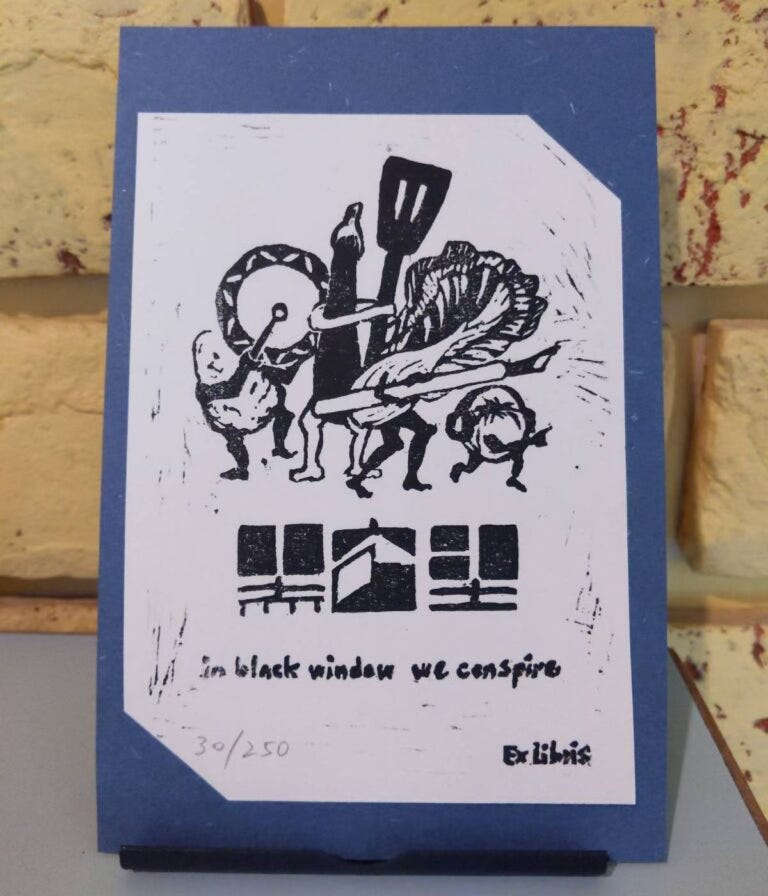
    Black Window Bookplate

    Further Reading

  • Comparing Cosmos and Ethereum Ecosystems from the Interfaces of Keplr and Metamask

    Comparing Cosmos and Ethereum Ecosystems from the Interfaces of Keplr and Metamask

    Recently, Instagram launched Threads and expressly stated that it would later join the ActivityPub federation. After years of cultivation, the concept of federation on the internet has finally garnered some attention from general users. Besides ActivityPub, another point of interest is the blockchain federation, the Cosmos ecosystem.

    (more…)
  • DHK dao-mocracy: The “making of” validator governance

    DHK dao-mocracy: The “making of” validator governance

    Established in 2020, DHK dao later became a validator for several chains in the Cosmos ecosystem, playing a role similar to that of a “legislative councilor” and participating in governance of the blockchain world.

    (more…)
  • Wishing you progress in the new year and good health

    Wishing you progress in the new year and good health

    Since 2018, I have been distributing LikeCoin red envelopes every year using the Lunar New Year as an excuse, and this is already the sixth year.

    With the development of technology, the distribution method has changed every year. Starting from the most primitive and closest to tradition in 2018, commemorative coins that can be redeemed for LikeCoin online were placed inside paper envelopes. Later, people could simply leave their wallet addresses in posts to receive them. By last year, as the infrastructure matured, I invited everyone to follow the tutorial to set up their own self-managed LikeCoin wallet, and by leaving a comment, they could receive a red envelope. A total of 1,116 were sent out, which was quite tiring just to think about it.

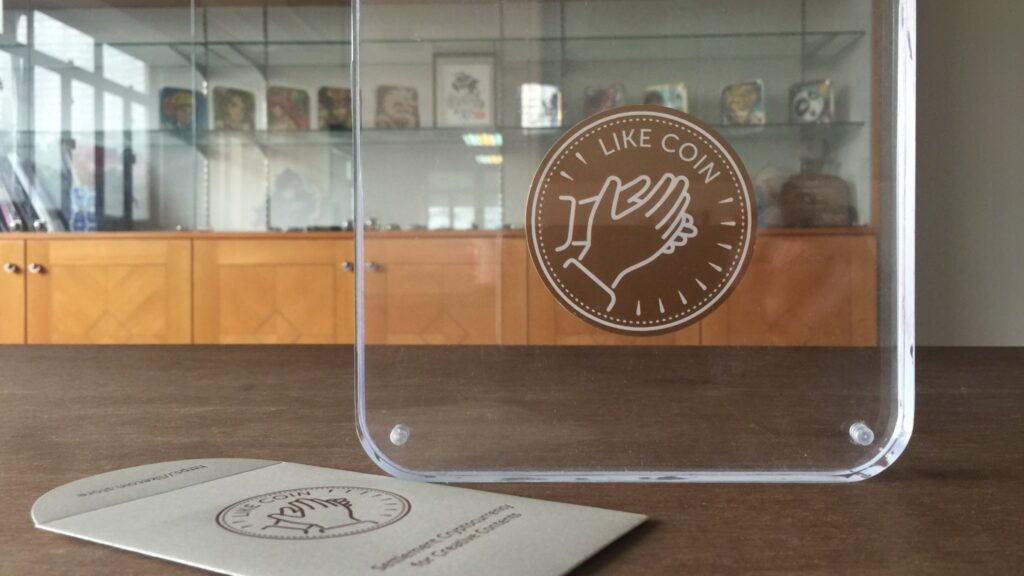
    LikeCoin Commemorative Coin
    LikeCoin red packet in 2018

    In this Year of the Rabbit, I learned to be lazy, entrusting the task to a bot, which helped me find readers who held my Writing NFTs, and then I sent my red packets and blessings to everyone in bulk.

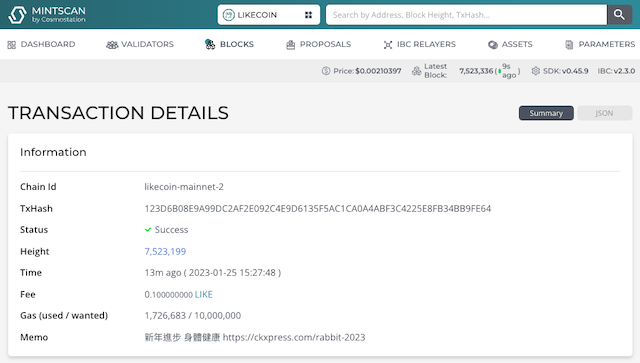
    If you are currently collecting any of my Writing NFTs, or have purchased the NFT book “Moneyverse: How money works in the multiverse“, please search for your wallet address on Mintscan. You should have already received 388 LikeCoins, along with my blessings. So this is not only about practicing being lazy but also about using the Lunar New Year as a thanksgiving to thank those who have supported me in the past.

    Mintscan

    If you bought the book but didn’t receive a red packet, it’s most likely because you haven’t claimed your NFT yet. It’s like buying a pair of shoes online but not providing a shipping address, so the sender can’t deliver the goods to you. I understand that everyone is busy, so I haven’t been urging you. When you have time, please check your mailbox, search for the email sent to you from [email protected], and follow a few steps to claim it.

    If you are also an author and want to reward readers who have collected your Writing NFTs, you may follow this tutorial to export a list and organize it using a spreadsheet. For example, you can sort by different criteria to reward your top fans, or offer different gifts based on the level of support.

    The example in the video is about giving away Writing NFTs, which is more literary. I, on the other hand, used another tool to send LikeCoin in bulk, not only because it’s more practical, but also to ensure all readers have some spare change on hand, making it easier for them to engage in the entire creative and reading ecosystem.

    The amount of the red packet is just a small token of appreciation, not significant, but enough to collect other Writing NFTs, directly support authors, or ideally, stake with a trusted validator and participate in liquid democracy. In short, it’s about taking action and being “as swift as a rabbit”.


    p.s. In the new year, the most important thing is to learn

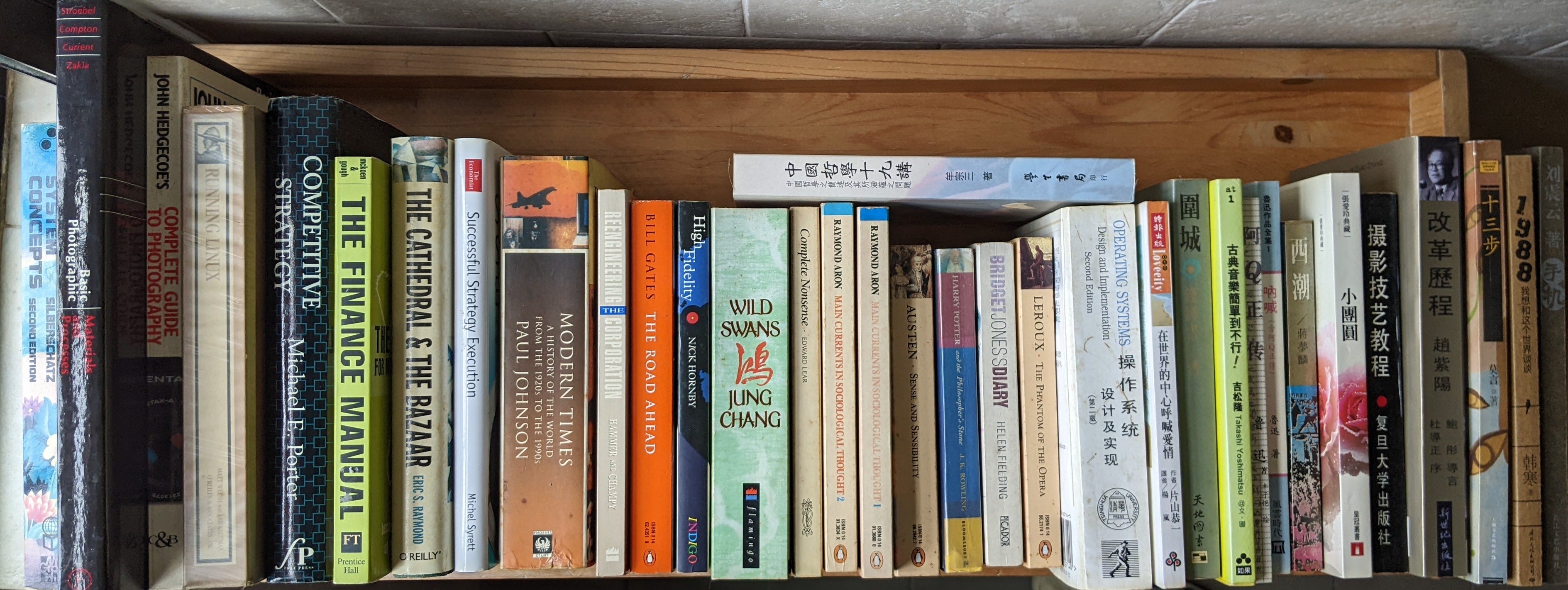
    Although I fully agree with and even try to protect the value of books, I do not call myself a “book lover”. Maybe I am just a “book buyer”. Many of the books in my bookshelf are not only unread but have been waiting for me to open them for years.

    I am ashamed of this, but I know that this bad habit is quite common. After all, reading is just one of the motivations for buying books.

    I don’t buy books purely for collection purposes that I never intend to read. However, because my reading speed is far behind my impulse to buy books, over time, I have accumulated a lot of “physical NFTs” that I only store and never read—yes, books are like physical NFTs. I have expressed my support for the authors and their works, and as a result, collected a version of the works, some of which even have the author’s autograph and may appreciate in value after going out of print. At the right time, I can also transfer these physical NFTs. As for reading, it’s certainly my original intention, but it’s only part of the whole meaning.

    After writing about Z-Library last week, I was inspired to tidy up my bookshelf, download digital copies of some books I own, and let the corresponding physical NFTs drift away. Information is valuable when it is fluid. Having these books sit in my bookshelf not only takes up my space but also wastes their life. In the new year, the most important thing is to learn. If you are interested in any of the following physical NFTs, please send me an email, and I will find a way to mail them to you.

    Although I don’t think anyone would be interested in “Running Linux” from nearly thirty years ago (nor can I understand why I kept it for decades and moved it from one place to another multiple times), some are timeless masterpieces that I almost can’t bear to let go. But when I think about the next person who will read them, I feel that the joy of reading alone is not as good as the joy of reading together.


  • Reader Referendum: 2023 Writing Plan

    Reader Referendum: 2023 Writing Plan

    I’m not the kind of person who sets annual goals at the beginning of the year. As far as writing is concerned, I always seem to hastily embrace the last-minute deadline for the weekly newsletter, hurriedly thinking of a topic and quickly getting to writing. I don’t like this state, as it lacks editing and professionalism, but I can’t change it for now.

    (more…)
  • From Kai Tak Airport to Star Ferry Pier: The 10-Year Promise of LikeCoin – The First Half

    From Kai Tak Airport to Star Ferry Pier: The 10-Year Promise of LikeCoin – The First Half

    In 2017, my partner and I initiated LikeCoin, claiming to dedicate ten years to this project. At that time, it was a bold statement, but most people regarded it as promotional language or even nonsense, and no one ever questioned this promise.

    In 2023, I would like to reiterate: For the LikeCoin project, I plan to invest ten years of my life.

    (more…)
  • 1,024 books, 943 readers, 18 regions, 21 channels, 34 days – A quantitative analysis of a decentralized publishing experiment

    1,024 books, 943 readers, 18 regions, 21 channels, 34 days – A quantitative analysis of a decentralized publishing experiment

    Hypothesis

    Decentralized publishing of Creative Commons licensed NFT book not only helps information dissemination but also balances the interests of authors, publishers, and bookstores.

    (more…)
  • If you had the supernatural power to make a piece of text last forever, what would it be? Our answer is A Declaration of the Independence of Cyberspace

    If you had the supernatural power to make a piece of text last forever, what would it be? Our answer is A Declaration of the Independence of Cyberspace

    If you had the supernatural power to make a piece of text last forever, and there is no word limit, be it a sentence, a poem, an article or a book, what would it be?

    What if you could even make a painting, a photograph or a film last forever? With countless great works of art in human history, what would you choose?

    These are the questions that the core developers of LikeCoin wrestled with for the past six months.

    (more…)
  • Genesis — Republic of Liker Land

    Genesis — Republic of Liker Land

    The new generation of LikeCoin with high-speed, low-cost and liquid democracy

    By the time this is published, Genesis block of LikeCoin chain has been produced. If that is not your language, try understand it this way: Republic of Liker Land was established on the cyberspace.

    This article introduces the elements and the mechanism of Liker Land, using as little technical jargon as possible. Developers are encouraged to check out our technical documentation or, better yet, our source codes which are open on github.

    (more…)