
The government wants to position Hong Kong as “The Premier Hub for Mega Events,” pulling out all the stops to attract international activities. But ticketing systems—a key element of the experience—are woefully behind the times.
Below, I’ve compiled four of the worst, in the spirit of “telling Hong Kong’s story well.”
#4: Major Cinema Chains
The first that comes to mind is the most familiar one: movie tickets. Among Hong Kong’s major cinema chains, only Emperor doesn’t charge an extra handling fee for online bookings. The rest all do, which is absurd.
“Everything that exists has its reason”—online booking fees have their backstory, perhaps the tech provider takes a cut. But buying online in advance saves the cinema staff time, reduces queues, and gives them earlier visibility into ticket sales to help with scheduling. The pricing logic works in reverse, encouraging people to buy in person from a clerk. Unless you insist there’s more “human warmth” that way (only LUX Theatre might qualify), for the audience, clearly, the problem lies in the system.
The film industry constantly urges people to come out and support cinema. I’ve always done my part. In return, I’d appreciate it if cinemas made their pricing a little more reasonable—and convenient.
#3: URBTIX
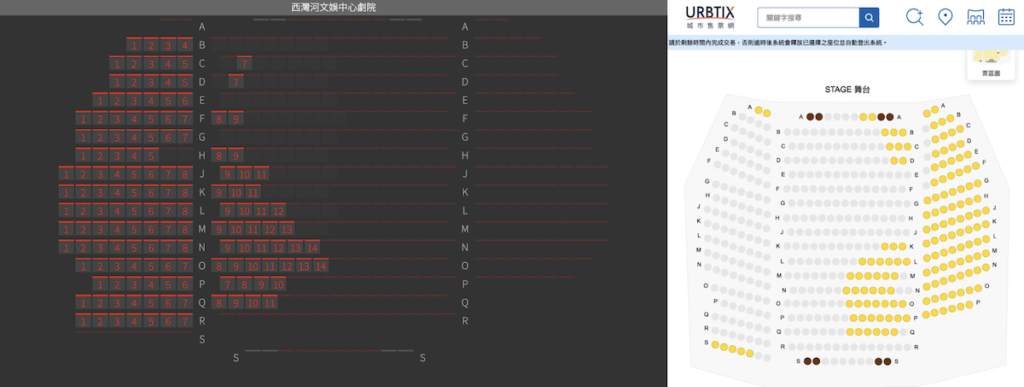
Last Saturday, I wanted to see Theatre Ronin’s 20th anniversary production, an adaptation of Xi Xi’s novel Deer Hunt. I went to Art-mate’s event page to buy tickets and noticed all the available seats were clustered on the left side of the venue. Puzzled, I called the venue, Sai Wan Ho Civic Centre, to ask. They told me the available seats were all on the right—with no explanation for why they were concentrated on one side. I figured the contradiction was just a matter of “perspective” and didn’t dwell on it. Since there were still plenty of tickets, I decided to head to the venue and figure it out in person, saving on the handling fee in the process (yes, URBTIX shares the same strange logic as the cinemas). Besides, even after buying online, you still have to pick up a paper ticket at the venue anyway.
In the spirit of “ask AI about everything,” I told Claude the situation. Even Opus 4.7 was stumped. When I arrived at the venue, the mystery was solved: the theatre had split the tickets into two batches, with the right side sold by URBTIX and the left by art-mate. The person I’d spoken to on the phone was from URBTIX.
Even though it’s online ticketing, the two channels can’t read from the same database. Instead, they “enact physical-world logic” like NFTs. Clearly this isn’t a technical limitation—it’s that URBTIX, run under the Leisure and Cultural Services Department, is ancient. Since the agency faces no competition, why bother to “optimize, refine, or build” anything?
Allocating tickets between sales channels is just a quirky user experience, e.g. I bought through URBTIX at the venue, I couldn’t choose a left-side seat with a view of the live accompaniment. That said, overall, as long as an event isn’t fully booked, it’s not a huge problem. It works, at least. So URBTIX only ranks third.
#2: HK Express
Mega events tend to draw foreigners, so it makes sense to include airfare on this list.
When traveling abroad, given the choice, I almost always fly budget. Beyond the price, what I appreciate is the user-pays, pay-as-you-go logic: checked baggage costs extra, and—most importantly—meals aren’t included. Traditional in-flight meals are wasteful; I can’t even stand watching others waste them.
So even though HK Express doesn’t include meals, doesn’t let passengers eat their own food, limits carry-on to one bag under 7 kg that must fit under the seat, and constantly tries to upsell you—I can live with all of that. Except for one particular flight.
My partner and I were flying to Taipei. I checked in online 18 hours in advance. Setting aside the clunky interface and login headaches, here’s the kicker: even after online check-in, there’s no e-boarding pass. You still have to go to the counter at the airport. Whatever—but worse, despite being on the same booking, our two seats were 17 rows apart. I resigned myself to the explanation that I’d checked in too late and the adjacent seats were all taken.
At the airport, since I had to visit the counter anyway, I casually asked the ground staff why our seats were so far apart. They said it was random. That was bullshit, but I’m too considerate to give frontline staff a hard time, so I let it go.
Then, once everyone had boarded, I—sitting at the back—noticed several empty seats nearby, including the one directly behind me. I asked a flight attendant if I could move. They insisted that changing seats would cost an extra HK$100.
I don’t think I’m the type to demand both cheap fares and endless extras, but HK Express isn’t just cutting costs anymore—they’re actively engineering a worse experience, hoping passengers will cave and pay for “value-added services.” This isn’t bad service. It’s bad faith. I genuinely feel sorry for the HK Express frontline staff who have to take the heat for it.
#1: HK Ticketing
To explain why HK Ticketing tops the list of awful ticketing systems, let me just lay out my recent experience buying tickets to Sandy Lam’s Hong Kong concert.
March 20: Public sale on HK Ticketing began at 10:00. I opened hkticketing.com half an hour early to prepare. The site required me to log in before buying, so I scrambled to register an account before 10:00—only to find that registering didn’t automatically log me in. I thought I’d be racing to grab tickets. Instead, I spent the next two days repeatedly trying to log in, and failing every time. (Blame me for being naive enough to buy tickets without a bot or AI.)

March 22: 48 hours later, I tried logging in without much hope—and somehow it worked. Bizarrely, there were still a few seats left. The handling fee was HK$100 per ticket. I thought I was holding the line against scalpers, but it turns out the official channel is the scalper. I caved, picked two tickets, filled in my details—and then got stuck at 99% on the payment page.
A FEW MOMENTS LATER: Maybe half an hour later, I couldn’t keep staring at the screen and almost missed it: the payment page had finally loaded, with just over a minute left on the clock. I scrambled for my credit card and managed to complete the purchase. But the system only said “Pending ticket issuance”—and even once issued, the “ticket” would just be a QR code I’d have to redeem at a specific location.
March 27: HK Ticketing emailed me to say their new website would launch on March 30, and that users would need to re-register. So what happens to my tickets?

April 1: I registered and logged in on the “new website” (which looked identical to the old one). Still showing “Pending issuance.” I couldn’t understand why generating a QR code required waiting, and started to wonder if I’d been phished.
April 2–28: The concert was in May, but having paid for tickets I couldn’t actually obtain didn’t sit right with me. I periodically tried to log in to check. I say “tried” because even checking ticket status meant conquering a perpetually broken login page—and on the rare occasions I got in, the system would log me out within minutes, “for my security.”
April 28: Finally, HK Ticketing notified me that tickets had been issued. I struggled my way back in to take a look. I wanted to screenshot the QR code, but the system warned me that the code was dynamic—meaning I’d have to successfully log in at the redemption kiosk itself…
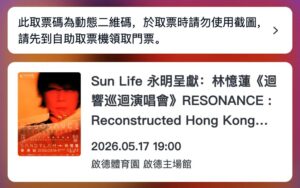
April 30: Self-service kiosks are absurdly scarce. On all of Hong Kong Island, there are exactly two—in Sai Wan and Ap Lei Chau. Skipping the rest of the details: after 40 days of effort, I finally managed to obtain two tickets from the official scalper.
Kai Tak Stadium seats 50,000. A single concert’s handling fees alone come to HK$5 million—and this is the flagship venue of the “city of mega events,” the heart of “Night Vibes Hong Kong.” Who pulls off the feat of charging sky-high fees for a third-rate ticketing system? The venue operator, New World.
Back in the dot-com era, Hongkongers learned firsthand how property developers do IT—with all the heart and might one would expect. Thirty years later, New World’s IT efforts remain breathtaking. They can build the entire Kai Tak Stadium, brand it Hong Kong’s home stadium, and pair it with a trash-tier ticketing system that gouges users with absurd handling fees.
Hong Kong wants to be a city of mega events. We’ve got the MacBook Pro M5 Max ready—and we’ve installed MS-DOS on it. To New World’s management and government officials wondering what residents and tourists actually experience at these “mega events”: go buy a concert ticket yourself.
P.S. There’s another outrageous experience worth writing about, from yet another garbage system: eMPF (the Mandatory Provident Fund platform). Not sure if anyone’s interested, but if there’s a show of hands, I’ll find time to write about it.
Leave a Reply