
The IBO (Initial Book Offering) of Attack on Freedom, limited to 100 copies, sold out last week.
Thank you again for the readers’ support. From now on, I have no more book-selling tasks for the time being. The editing and writing process will still take some time; before that, I will only update the 100 co-publishers on the progress and discuss details. The first co-publisher briefing will take place this Friday, and this issue of the newsletter might be the last article related to Attack on Freedom before its official publication.
Yum Kee Noodles in Tai Po Market
Selling out 100 books feels good.
This sentence sounds like a platitude, but the point here is not that the books sold well or that the income was high. After all, 100 books are not many, and even with a price of $100 USD each, compared to the cost of producing a book, it is just an ordinary or even humble budget. The “good feeling” lies specifically in the fact that it sold out.
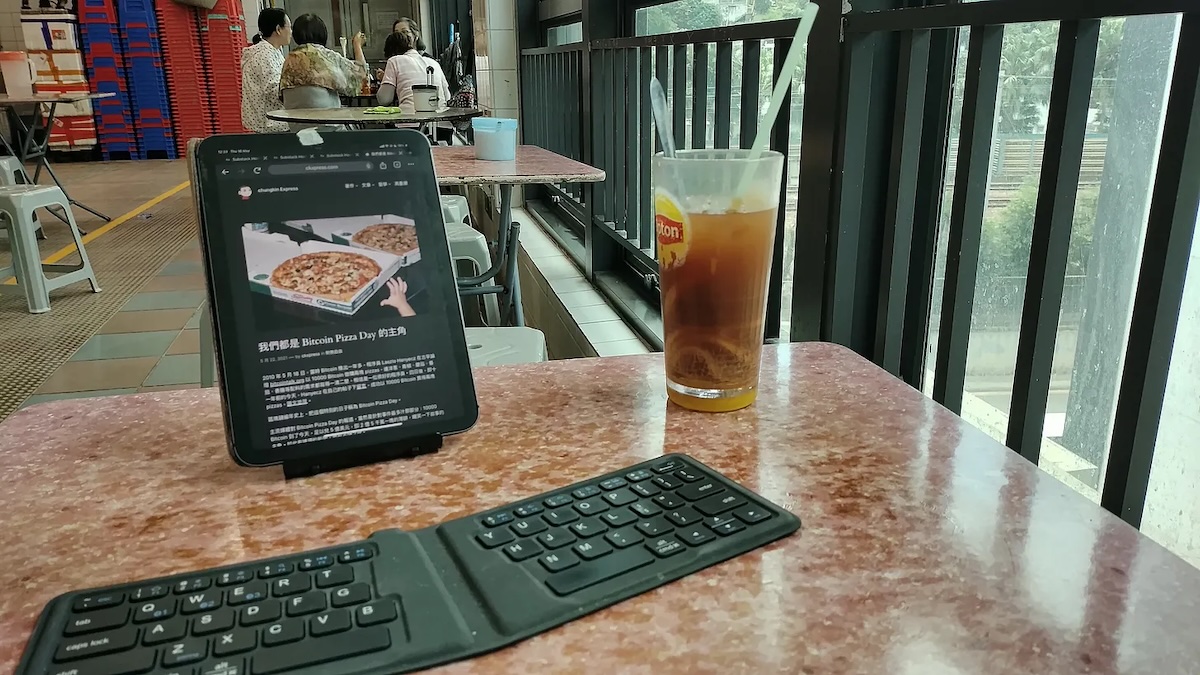
I often visit the Tai Po Cooked Food Center. Many of my newsletter articles were written here while drinking lemon tea and eating toast. The center is the largest in Hong Kong and preserves traditions very well. Among its many famous small shops is Yum Kee, which exclusively sells fishball noodles—at least, you can ask for just fishballs without noodles. Whether their noodles are the best is a matter of opinion, but it is an objective fact that it is often crowded and hard to get a bowl.
Yum Kee is open Tuesday to Saturday, from 5:30 AM to 10:30 AM. I can’t imagine who eats fishball noodles before dawn, but if you think you can arrive at 10:00 AM and get a bowl, you will likely find it already sold out. Its closing time is merely for reference; in reality, it closes whenever they sell out or reach 10:30 AM, whichever comes first.
Unlike in Taiwan (especially cities like Tainan), shops that limit business hours based on ingredient supply are rare in Hong Kong. The reason Yum Kee can maintain this “attitude” is its high-quality ingredients and the affordable rent in government-managed centers. A rational shop owner elsewhere would over-prepare to avoid wasting business opportunities due to high rents, but I admire these rare shops that prioritize quality over quantity and avoid food waste.
This brings me back to the limitation of paper books.
Oversupply or Undersupply
Some readers felt my 100-copy limit was just “hunger marketing” or mystery-mongering. I want to explain the philosophy behind it. While I advocate for digital publishing, I actually support paper books more than average—both in terms of money and energy spent.
As I grow older, I realize that time, energy, and space are limited. Because I love books, I take every purchasing decision seriously, hoping to keep a book until I die. If I didn’t care about the printing, layout, and texture, I would simply choose the more convenient electronic version.
In publishing, fixed costs like layout and plate-making mean that the more you print, the lower the unit price. For an independent author in a small market like Hong Kong, you might only sell a few hundred copies, but the cost to print 1,000 is nearly the same as printing 100. Most choose to over-print and risk wasting copies.
I chose to limit Attack on Freedom to 100 copies because I would rather have readers miss out than see my work trapped in a warehouse for a decade only to be recycled as waste paper. Dignity and the avoidance of waste are why “selling out” is so important to me.
Paper Books Out of Print, E-books Take Over
Finally, books are different from food. When fishball noodles sell out, you must wait until tomorrow. When these 100 paper books sell out, readers can still buy the electronic version. Furthermore, my works use Creative Commons open licenses, so anyone who wants to read them will be able to do so.
Since there is no worry about accessibility, I choose to strictly limit the physical quantity. The paper book is limited to 100 copies, but the e-book is “mint on demand“—as long as there is a reader, it will continue to be “printed” digitally. Rather than rejecting paper books, I am limiting them because I cherish them too much.
p.s. Although I’m not a food influencer, I know far more about Hong Kong’s local delicacies and independent shops than many YouTubers. If you take food seriously, feel free to private message me to exchange “pocket lists”.
Leave a Reply