Hong Kong has always been renowned for its efficiency, outshining Taiwan by leaps and bounds. While Taiwan’s multitude of parties are continuously embroiled in disputes over various social issues, Hong Kong has, in what feels like the speed of light, already completed the entire process for the Safeguarding National Security Bill – from public consultation, summarization of opinions, submission to the Legislative Council, to debates, reviews and passing the first and second readings. After attending the Taipei Book Fair and dragging a suitcase full of books back from the airport, I’ve come to deeply appreciate the benefits brought about by “advance to prosperity”.
The Taiwanese Lifestyle: A Proof of Work
However, in one aspect, the efficiency between Taiwan and Hong Kong is completely reversed – and that’s printing. Years ago, when I was in Taiwan and in dire need of printing, I discovered to my relief that virtually every convenience store offered printing services. Operating a printer at 7-Eleven, I felt like a kid who had just moved to the city from a remote village and was using a flush toilet for the first time, full of wonder and amazement.
You might find it hard to believe, but in Hong Kong, I’ve had to take a half-hour bus ride to the office just to print a single document more than once. Printers at home have become obsolete, stationery shops have turned into real estate agencies, and photo developing shops have shut down with the rise of Instagram. Finding a printing service during the day is hard enough, let alone at night when it’s practically impossible. Thankfully, this hasn’t caused me much trouble since I hardly need to print anything throughout the year, having used electronic signatures for many years and being accustomed to reading directly from a computer screen. In fact, nearly every time I’ve needed to print something in the last decade has been because of something related to Taiwan, whether it’s an entry permit or some application.
Taiwan is fantastic, except for the extensive use of paper. Every time I’m in Taiwan, my pockets are always stuffed with receipts and invoices. Although recycling is well-managed, true environmentalism should be about avoiding unnecessary production, right? Besides, in education-focused Taiwan, there’s an abundance of certificates for everything; for someone unskilled like me, there’s a pile of appreciation certificates for sharing sessions at universities or conducting training at various institutions, which leaves me blushing from head to toe. Out of respect, I’ve kept and preserved them all, only to find out later that they can actually come in handy when applying for certifications.
From education and lifestyle to consumption, everything requires proof. Living in Taiwan is indeed a “Proof of Work”.
From Invoices and Receipts to NFTs and DIDs
Let me take this moment to elaborate, perhaps for the “10th time” (cue mysterious voice: it’s been more than ten times, actually), on the significance of NFTs. Essentially, the nature of NFTs is quite straightforward; they serve as a form of certificate. In some scenarios, they act as receipts, proving ownership of something for which you’ve either paid money or exerted effort. In other cases, they resemble certificates of appreciation or diplomas, evidencing your attendance, participation, or completion of something.
Unlike invoices, which are centrally recorded in the government’s database by tax authorities, akin to fiat currency, NFTs are recorded on a blockchain that operates without a central authority but with consensus. Compared to certificates of appreciation, which can be easily forged and are hard to verify, NFTs offer immutable but publicly accessible records, making verification a breeze.
Regarding the management of invoices through devices issued by the Ministry of Finance, the corresponding digital counterpart would be cryptocurrency wallets like Metamask. Furthermore, the “Digital Wallet” announced by the Ministry of Digital Affairs at the beginning of the year, set to officially launch next year, will serve as a carrier for various credentials such as the Citizen Digital Certificate, health insurance card, membership cards and qualification certificates. Following the W3C international standard, it utilizes Decentralized Identifiers (DIDs) to manage different aspects of personal identity, not only eliminating the need for paper but also fully embracing the principle of decentralization.
On one hand, Taiwan relies heavily on paper-based processes, showing a certain adherence to tradition. On the other hand, it embraces digital democracy in a highly progressive manner, leaving other nations’ governments in the dust. I believe “Taiwan can help” and am looking forward to Taiwan demonstrating to the world a simple yet non-authoritarian digital democracy. I have great confidence in the Ministry of Digital Affairs and the civil society, but my only concern is whether public outreach is sufficient and whether the people’s understanding can keep pace. I worry if fear, uncertainty and doubt (FUD) towards the government and emerging technologies could overshadow well-intentioned policies.
Bookplate NFTs and a Web3 Bookshelf
Invoices correlate with purchases, diplomas with education, and letters of appreciation with public participation. But what about a medium to encapsulate our reading history and cultural footprint?
Back in the days before e-books became popular, when I still bought physical books in large quantities, I had a habit of keeping the bookstore receipts tucked inside them, noting the when and where of my purchases, and incidentally using them as bookmarks. Over the years, as I’ve gradually parted with my collection of physical books, flipping through them one last time often revealed receipts that had become unreadable. For books that held special meaning, I sometimes went a step further, signing my name and dating the title page.
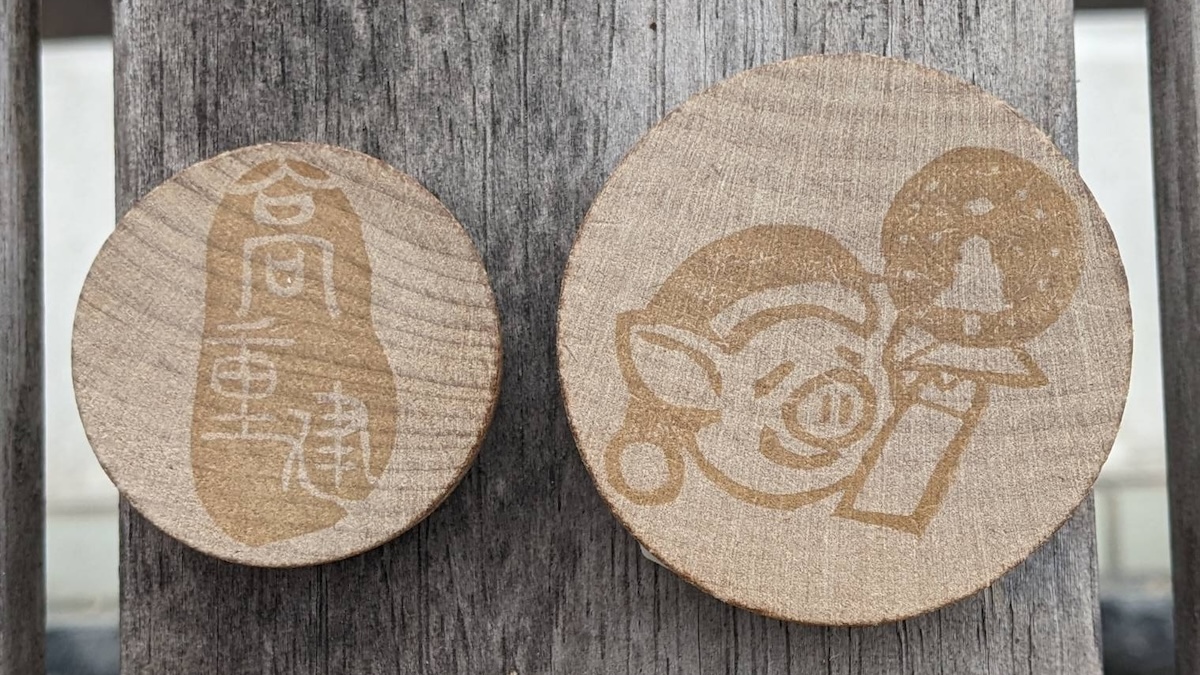
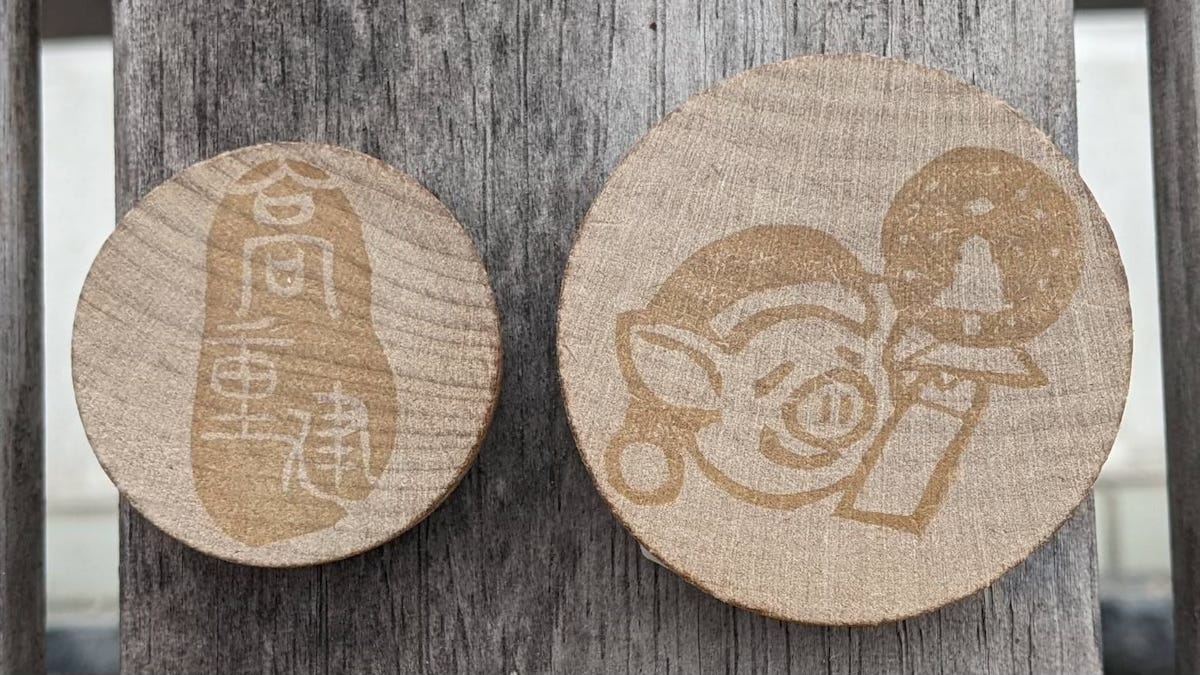
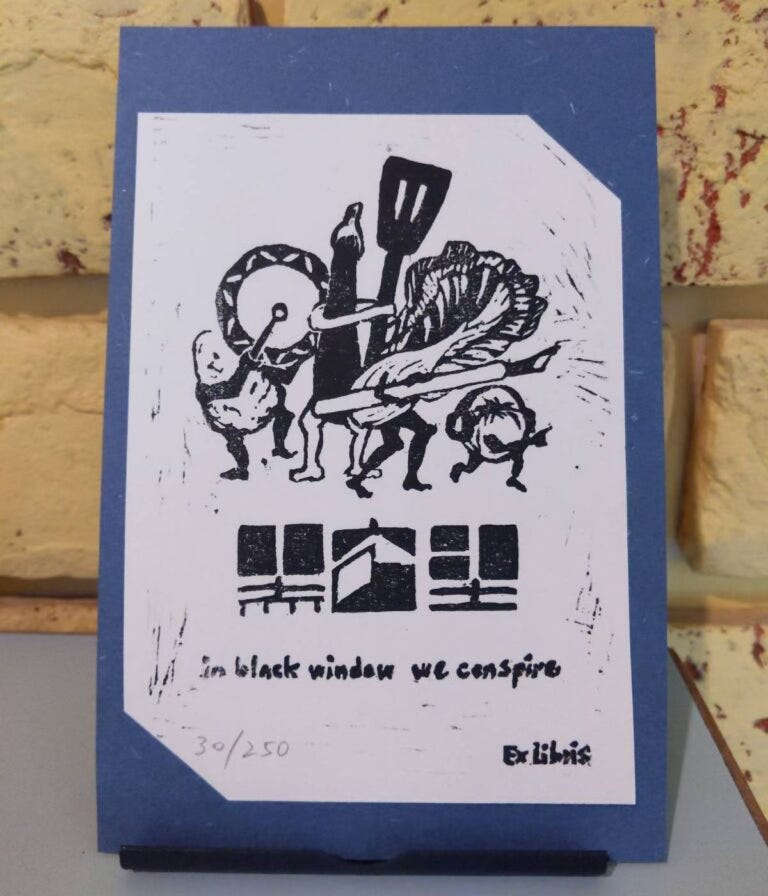
Whether it’s preserving receipts, personal signatures, or stamps, any method of “declaring ownership” is purely a personal act, invisible to a community. Recognizing this, I’ve included a book token with the direct sale of Moneyverse: how money works in the multiverse. Unlike traditional book tokens made from prints, this book token utilizes NFT technology to verify ownership of the corresponding physical book, offering immutable and publicly accessible records. Imagine if other books and sales channels could support book token NFTs, enabling book lovers to connect with authors while building a Web3 bookshelf, thus forging their identity in the world of reading and forming connections through books.
In the first phase of a decentralized publishing experiment at the end of 2022, I published Moneyverse: how money works in the multiverse as an NFT ebook. If this concept seems bewildering, think of an “NFT ebook” as “NFT + ebook”, by comparison to current practices. After purchasing the NFT ebook, you’d receive the text via email, similar to receiving a physical book in the mail after purchasing Moneyverse: how money works in the multiverse. Meanwhile, readers could also claim an NFT, just like now with the book token NFT, only that back then, I figured book tokens were less recognized than NFTs, hence the lack of such terminology.
To be honest, out of the 1024 NFT ebooks sold last time, 312 NFTs went unclaimed. Although it’s somewhat disheartening to have a batch of NFTs sitting unclaimed in my wallet, since the text had already been acquired, the NFTs seemed to serve little purpose beyond display. Readers’ reluctance to claim them, similar to my own habit of declining receipts after shopping, is entirely understandable.
However, does this “included with the book” NFT serve no purpose other than display? The answer is a resounding no, and let me prove it right away. First and foremost, by accessing the NFT’s display interface, the general public can see information about the book, while the holders can link to the text, which will be kept up to date. Moreover, readers who own the Moneyverse: how money works in the multiverse NFT can enjoy a 30% discount when purchasing the physical book Moneyverse: how money works in the multiverse. This discount should have been available from the publication’s outset, but due to the first edition selling out and only now with the second printing can I provide the original NFT holders with a discount code via email, for which I apologize.
While a 30% discount on books is nice, let’s spice things up a bit. If you return the Moneyverse: how money works in the multiverse NFT to ckxpress.likecoin (like13f4glvg80zvfrrs7utft5p68pct4mcq7t5atf6) and email me your postal address, you will receive a signed physical copy of Moneyverse: how investment works in the multiverse. This arrangement might seem simple, but on further thought, you’ll realize that without NFTs, such an action would be impossible. After all, you don’t truly own a traditional ebook, so how could you return it? However, with the Moneyverse: how money works in the multiverse NFT having a secondary market price of $39.9, and the physical book only costing $19.9, whether to exchange the NFT for a new book is left to the reader’s discretion.
This time, my new book is published in physical form, partly to satisfy readers who love physical books and to engage as much as possible with the traditional publishing and sales ecosystem. On the other hand, it’s a “covert operation” as the second phase of the decentralized publishing experiment, incorporating the book token NFT, not only allowing readers to showcase their physical book collection on a web3 bookshelf but also opening up more possibilities. What book token NFT holders will gain in the future, even I don’t know. What I do know is that with this connection, I, the persistent author, will be able to find the readers who have supported me and properly thank you.
Further Reading