

The moment a certain die-hard Hikari Mitsushima fan saw the cast list for Bringing My Brother Down to a Portable Size, the decision to buy a ticket was already made. So much so, in fact, that he didn’t even stop to wonder what the film was actually about—even though beneath its seemingly tongue-in-cheek title, the underlying meaning was hiding in plain sight.
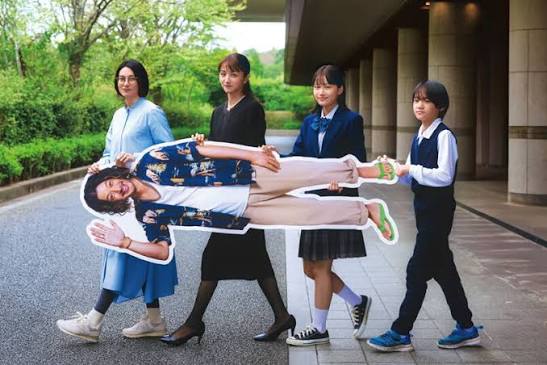
The protagonist, Riko Murai (played by Kou Shibasaki), is an author who receives an unexpected call from the police one day asking her to collect the remains of her older brother, who had died suddenly at home. Four days later, Rico returns home with his bones. While both stories center around a sister traveling out of town to claim her brother’s body, Bringing My Brother Down to a Portable Size is by no means a Japanese counterpart to A Foggy Tale. Riko’s brother was not a victim of political persecution; he was simply a deadbeat. Estranged for years, brother and sister hadn’t spoken in ages. Claiming the body went off without a hitch; sorting through the clutter of the apartment he left behind, however, proved to be the real trial.
The film is adapted from the autobiographical essay collection 兄の終い by Riko Murai herself. The Taiwanese edition was given the runaway title: 最討厭的哥哥死了:被迫出來收屍的妹妹、前妻,還有女兒,又恨又哭加上一點笑聲的五日紀事. While definitely an excessive translation, its chief virtue is that it summarizes the entire movie in forty Chinese characters.
My mother passed away a little over two months ago. Having spent much of the past two months tending to her posthumous affairs, parts of the plot felt intimately familiar. The resonance isn’t hard to explain—death, after all, is just part of the ordinary fabric of life. Yet, right after wrapping up her arrangements, having barely stepped outside for nearly a year, I planned my very first trip to Miyagi Prefecture. Just before leaving, I watched this movie—only to discover that the deceased brother lived in none other than Tagajo, Miyagi. It felt almost too coincidental, like something preordained.
Destiny dictated that this loyal fan would make a pilgrimage to the Tagajo City Library—a public-private partnership run with Tsutaya Books—to hunt down the table where Kanako (the ex-wife, played by Hikari Mitsushima), her daughter Marina, her son Ryoichi, and Riko sat down for a meal. From there, following in the film’s footsteps, I walked over to the North Exit of JR Tagajo Station to revisit the spot where Kanako bid a tearful farewell to Ryoichi.
A significant portion of the film is devoted to clearing out the deceased’s apartment. I was especially fond of the scene where Kanako and Rico haul trash bag after trash bag of his belongings and hurl them down, shouting curses like “Pay me back!”, “Deadbeat!”, and “Liar!” to vent their lingering grievances. It wasn’t so much empathy that struck me, but how delightfully it paralleled a traditional Hong Kong Taoist funeral, where family members toss sack after sack of joss paper into the incinerator while chanting “Have a safe journey!” and “Take your things!”
I’ve always felt that sorting out your emotions requires sorting through your physical belongings first. I’m constantly tidying up around the house—less out of neatness than avoidance. Whenever my mood turns sour or my work hits a wall, I find myself clearing away odds and ends. On the surface, I’m setting things in order; deep down, I’m trying to settle my mind.
When it comes to sorting through an estate, this connection to clearing one’s mind and letting go of the departed becomes all the more inseparable. Kanako and Riko spent two days clearing out an entire apartment. My mother lived with me, and her belongings were kept neat and orderly, yet two or three months on, I still haven’t finished sorting them out. Part of it is not wanting anything to go to waste—it takes time to find people who actually need what she left behind. But part of it, inevitably, is a desire for an unhurried farewell: taking time with each keepsake, reminiscing over the small memories attached to it, finding the proper home for it, and, in the process, steadily sorting through my own feelings.
There’s a telling detail in the film that highlights the cultural gap between Hong Kong and Japan. After Kanako and Riko scrubbed the apartment spotless, the landlord inspected the unit upon handover and snorted, “Isn’t this place far too filthy?”—insisting that forfeiting the security deposit wouldn’t even begin to cover it. Instead of arguing, Kanako and the family bowed repeatedly in humble apology. To a Hong Kong viewer like me, the scene bordered on the absurd.
While my mother was nothing like Riko’s deadbeat brother, she was far from perfect. She could be spoiled, imperious, stubborn, and had a habit of pulling rank as an elder. Yet, curiously enough, she was widely respected and cherished during her lifetime. Seeing how well her friends treated her, I would sometimes even feel it was unfair to them: She isn’t related to you, and she didn’t even treat you all that well. Naturally, I wasn’t so blunt as to say that out loud; I simply chalked it up as her good fortune.
In her later years, when her mobility declined, our family would occasionally gather for seasonal dinners at a small hotpot joint in our village. The owner, L, was bafflingly attentive to my mother. At first, I assumed he was just an astute merchant applying the strategy of taking out the leader first—knowing that if he won over the matriarch, the rest of the children and grandchildren would follow suit. But as we visited more often, I began to see that L’s warmth was genuine; I was the one being worldly and calculating. Later, on an evening when we stayed late, L joined us for a beer. After two glasses, he confided that my mother reminded him so much of his late grandmother, bringing a deep sense of warmth and familiarity.
After my mother passed away, I walked past that hotpot restaurant countless times and frequently spotted L inside. Yet I always hurried past, avoiding conversation—whether that was my introvert tendencies acting up or something deeper. Last week, our biannual neighborhood newsletter was printed, and tasked with delivering copies to nearby drop-off points, I stepped into the hotpot shop. Like a bride bracing herself to meet the in-laws, I struck up a conversation with L and let him know that my mother had passed away months earlier.
From her long illness through to her final departure, I hadn’t shed a tear. Not because I was trying to act stoic, but because living under the same roof, watching her age and her health deteriorate, gave me ample time while she was alive to accompany her and come to terms with the reality of parting. Yet a single, simple question from L nearly broke me. He didn’t say “my condolences,” nor did he say how heartbroken he was. Instead, he asked:
“Did she suffer much in her final days?”
Beyond sorting through belongings, the other way a writer sorts through their feelings is, naturally, through writing. On this front, Riko Murai and I are cut from the same cloth.
In the film, while attending to the arrangements, Riko channelled her complicated feelings about her brother and snippets of their life together into the words that would eventually form her book. While I write primarily about web3 civic education, my daily routine follows a similar pattern: sometimes jotting down a flash of inspiration explaining a concept, sometimes capturing erratic, fleeting thoughts—the latter often finding their way into the postscripts of my newsletter.
Having not read the original prose, I cannot say what details were adapted or whether the changes were for the better, but one thing is certain: the title is brilliant. In contrast to the ashes left after a cremation in Hong Kong, the film portrays the Japanese kotsuage (bone-picking) ritual, where relatives pair up with long chopsticks to lift bone fragments into the urn, starting from the feet and ending with the skull. “Bring him down to a portable size” refers literally to cremating him so his remains can be carried home.
Peel back the physical layer, and the psychological metaphor springs off the page: packing away past grievances, finding a resting place in your heart for a brother you once despised, and making peace with yourself. This isn’t merely about releasing a knot of bitterness, let alone letting everything vanish into thin air. It is about allowing the departed to stay with you every single day like a shadow—like the smartphone in your pocket. It carries a certain weight and demands daily upkeep, but it remains an indispensable part of your life.
I am grateful not to have had such a rogue of a relative, but I believe this quiet cultivation has nothing to do with whether someone was unpleasant, nor is it strictly bound to bereavement. Anyone who has ever experienced an unforgettable bond and refuses to heal by wiping the slate clean must learn to “bring it down to a portable size” in order to live on, healthy and whole.
With the physical rites complete, it came time to tend to the affairs of the heart. Riko gathered those few days of experiences into Bring Him Down to a Portable Size—a neat little volume of “portable size.” It was a work of non-fiction memoir. As for having their lives and family matters laid bare on the page, aside from the unnamed brother who had no say in the matter, everyone was remarkably receptive—at least according to the film. His daughter Marina even handed copies out to her classmates, advising them to keep an eye out for her appearances.
Perhaps I’m not cut out for writing personal essays. I have always wrestled with the ethics of putting people close to me into print: how can one ever be sure the other person welcomes being turned into a character? How does one balance documentation against privacy? Consequently, I rarely mention family or friends in my pieces; even when an occasional letter-named character surfaces, it is almost always kept strictly brief.
At my mother’s memorial service, I printed a hundred copies of her life story as keepsakes for the guests, giving them a chance to know her a little better. For all my years advocating for decentralized publishing, when faced with the question of whether to digitize that book, these exact reservations held me back. I hesitated, putting off putting her out-of-print life story on-chain to preserve it for posterity.
After two months of letting things settle—and especially after watching this film—my hesitations finally melted away, and I resolved to see it through. After discussing it with my family (and with my mother), I realized I had simply been overthinking. Everyone fully supported publishing her life story, bringing Mom down to a portable size.
The Best of Times — The World Revolves Around Me
p.s. During a group chat once, B asked what “OG” meant (Original Gangster). N replied that it was equivalent to “ash-level” —a veteran of deep standing and rich experience. Looked at this way, my mother, who has now quite literally turned to ash, raised ten children and passed away as a great-grandmother. On the day of her memorial, four generations filled the funeral hall together. A true, bona fide “OG mother.”
Leave a Reply