
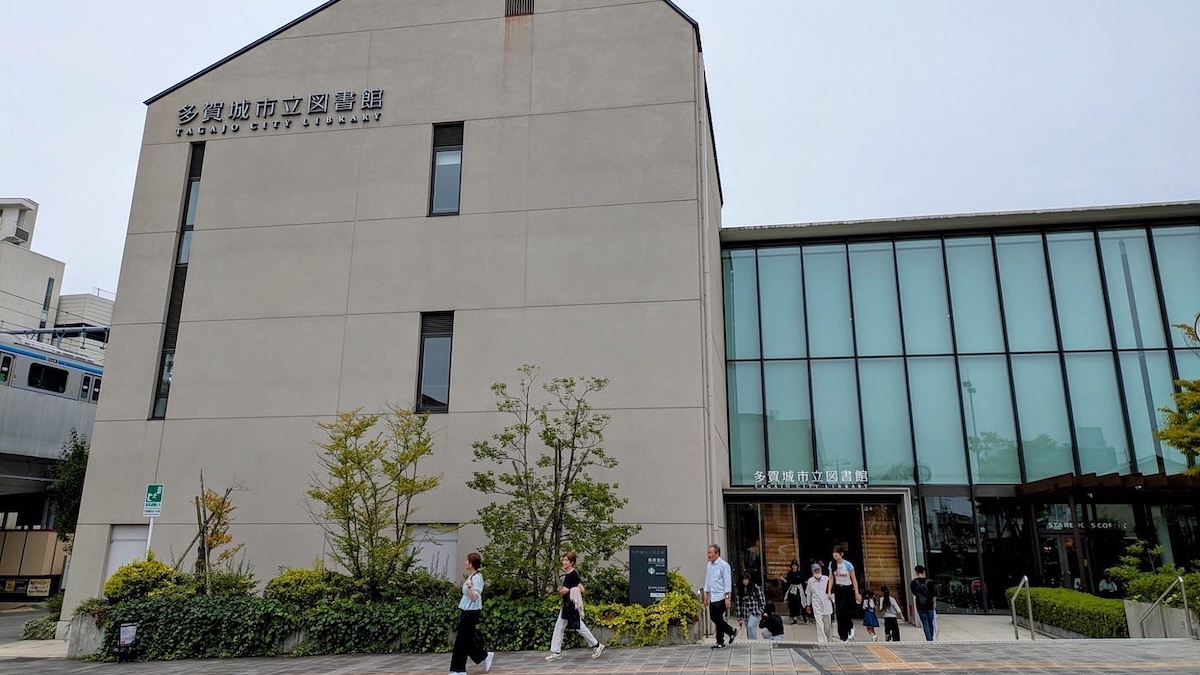
At the beginning of the month, I travelled to Sendai in Miyagi Prefecture, Japan. Just before the trip, I happened to watch Make My Brother Portable, which was also filmed in Miyagi. So I made a last-minute detour for some movie-location sightseeing: a 20-minute JR ride from Sendai to Tagajo to visit one of the film’s main locations, Tagajo City Library.
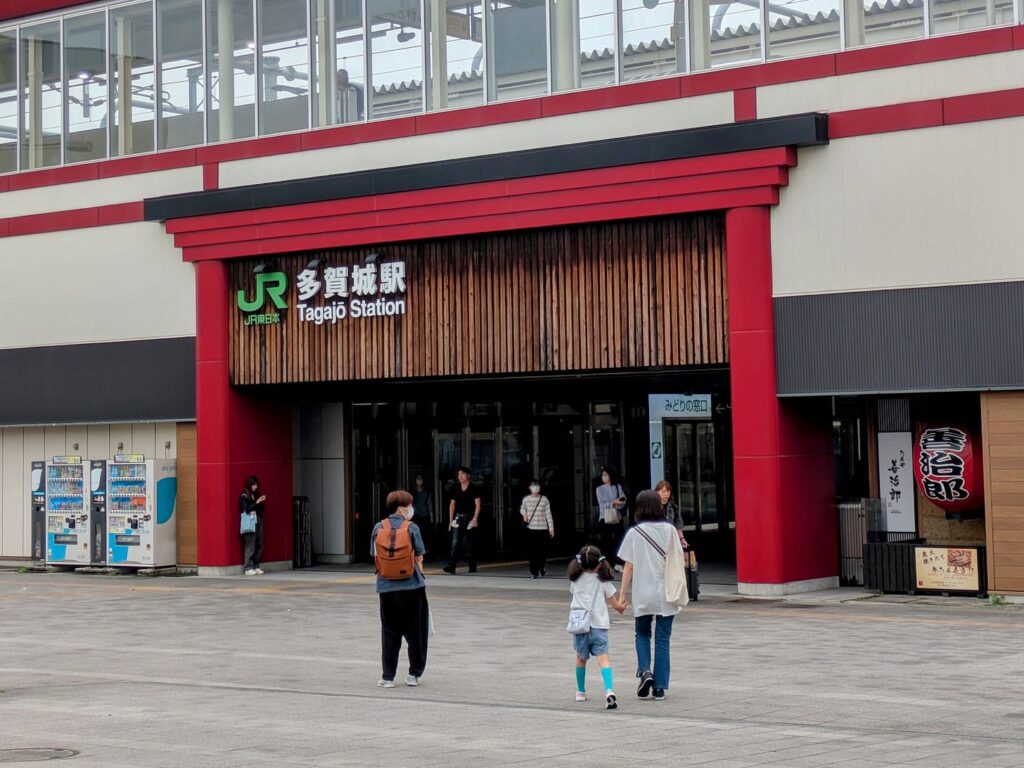
I had done a little homework before the trip and knew the library was not far from Tagajo Station. What I didn’t realise until I arrived was that the two were basically next door to each other. For someone from Hong Kong who assumes anything attached to a train station must be a shopping mall, that alone was a surprise.
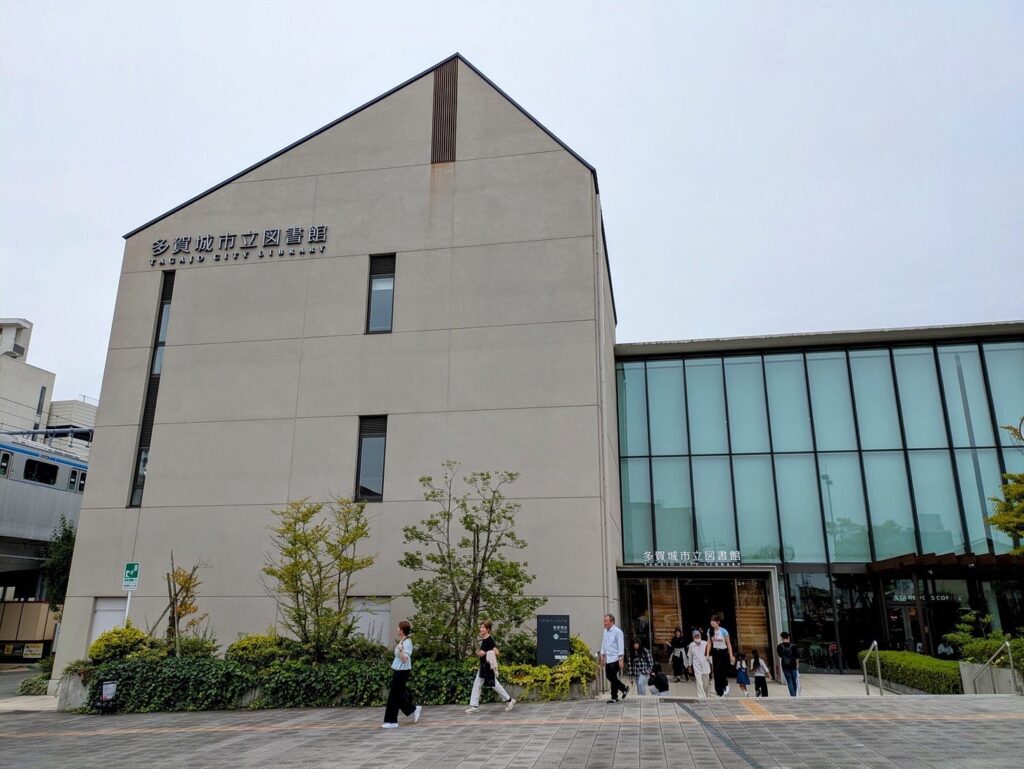
If, like me, you still associate libraries with solemnity, seriousness and a certain institutional dullness, Tagajo City Library will completely change your mind. The first thing that caught my eye was its architecture: clean lines, restrained materials and a surprisingly sophisticated feel.
Opened in 2016, the library is the centrepiece of the redevelopment around Tagajo Station. Following the 2011 Great East Japan Earthquake, it came to be seen as a symbol of the area’s recovery.
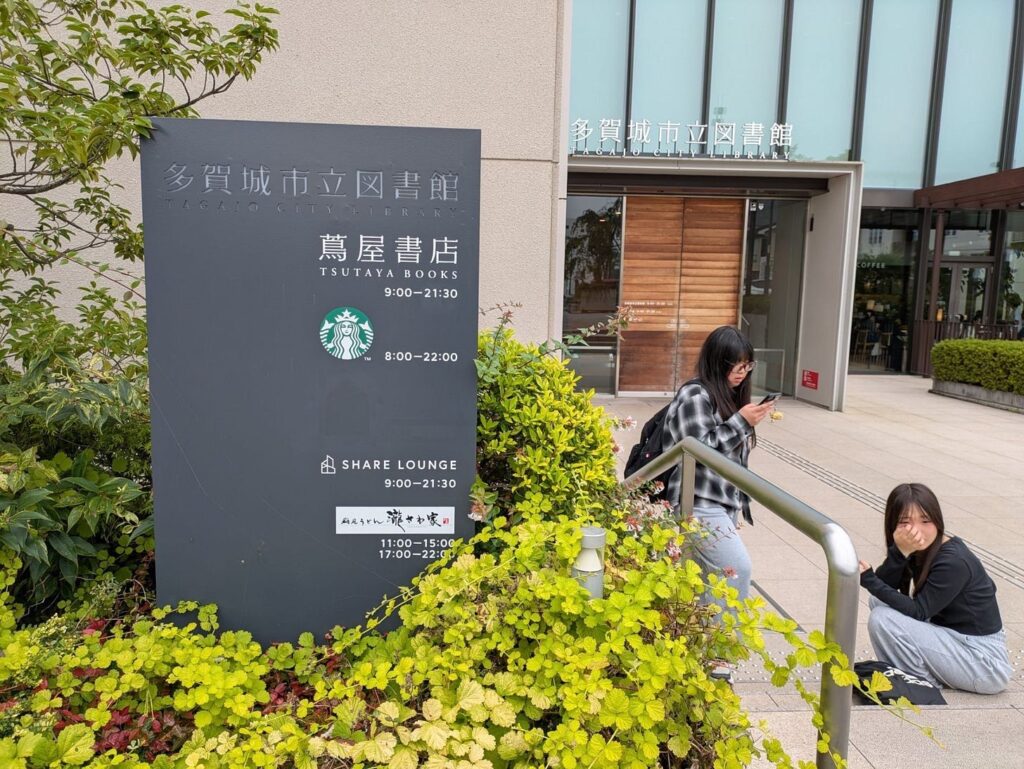
Libraries generally have strict no-food-and-drink rules, and the more traditional ones may not even allow you to talk. Tagajo City Library, by contrast, brings together a bookstore, café, co-working lounge, restaurant and shops, openly encouraging people to eat, chat and spend money. If you insisted on calling the place a small shopping mall next to the station, you wouldn’t exactly be wrong.
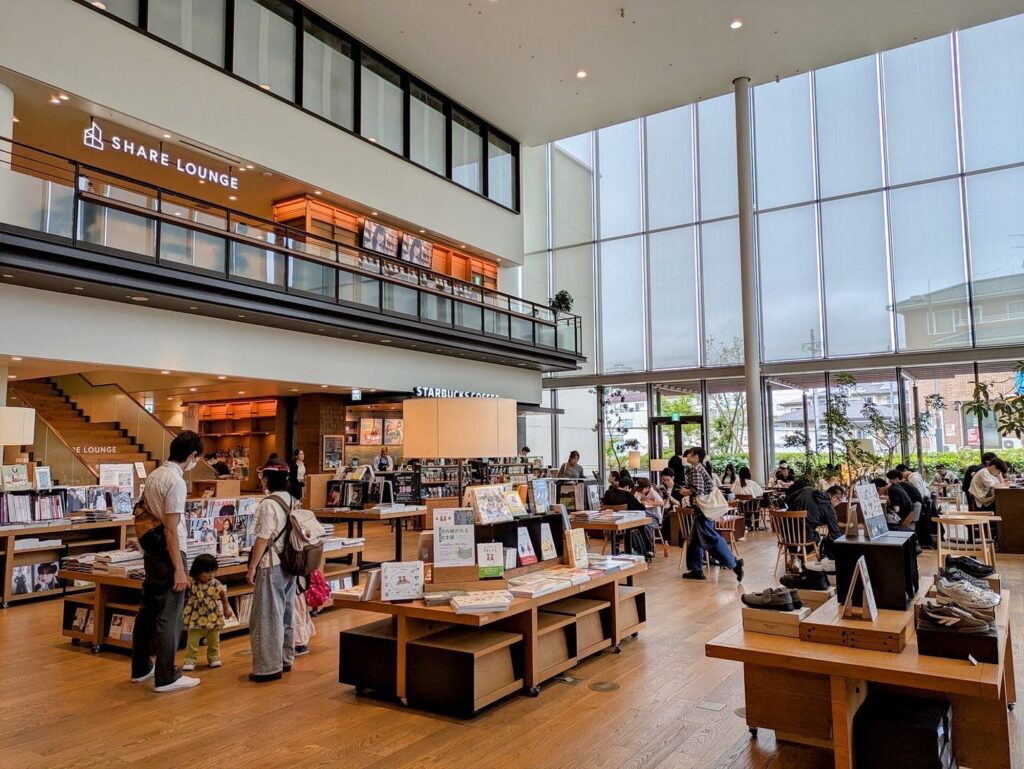
Before you even see a bookshelf after walking through the entrance, you are greeted by lifestyle brands and Starbucks. What kind of library is this?
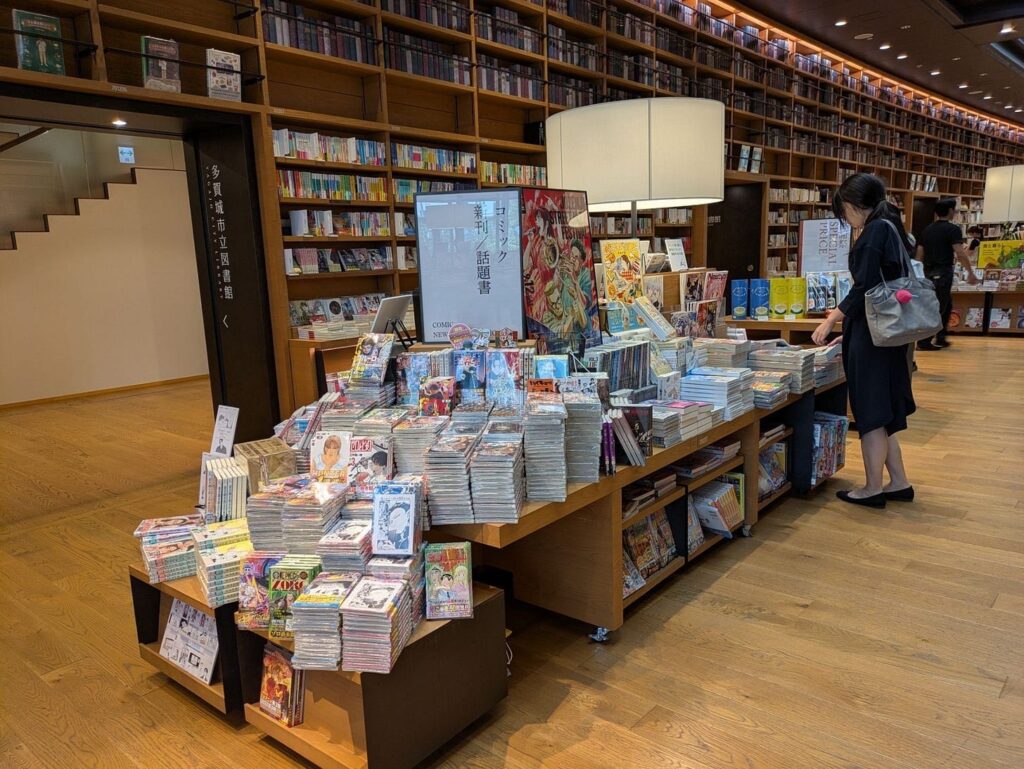
And the gauntlet doesn’t end there. After the shops and café, you still have to pass through the bookstore before reaching the actual library. Calling it three stages isn’t an exaggeration. With Japanese design and displays everywhere, plus all the latest manga, anyone with even slightly weak resistance to consumer temptation might end up making an “accidental purchase” before ever reaching the library collection.
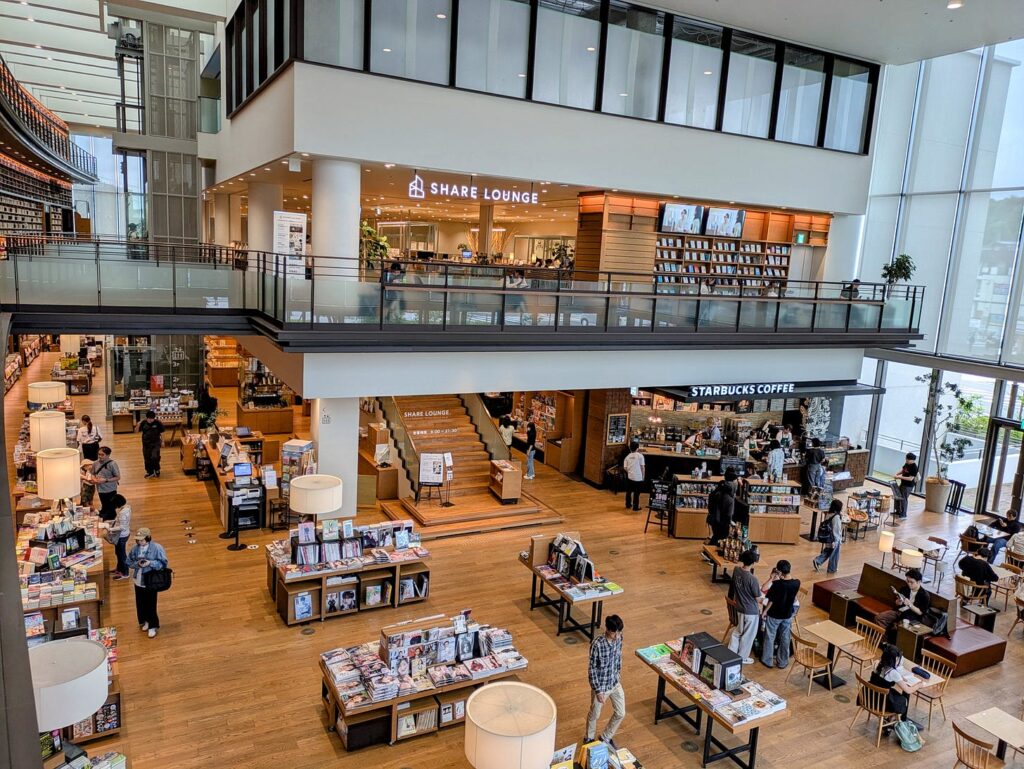
Tagajo City Library is three storeys tall. The higher you go, the more serious it feels — and the more it starts to resemble the library I had in mind.
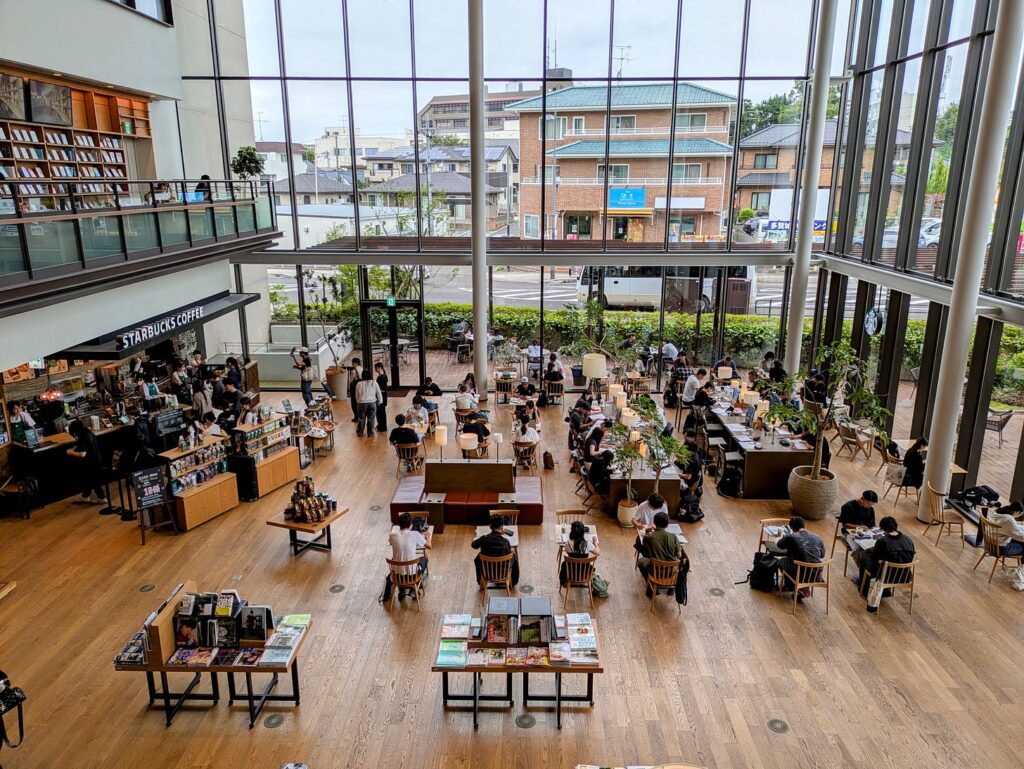
The new school term had just begun, and I visited on a Sunday, so for whatever reason, there seemed to be a lot of people doing homework and studying.
Perhaps it’s something to do with Japanese culture, but even with so many people around, the place remained remarkably quiet without ever feeling lifeless. Instead, there was a sense of energy that felt very different from my usual experience of visiting libraries in Hong Kong.
The unconventional approach at Tagajo City Library is not simply a matter of creative interior design. It stems from Japan’s 2003 revision of the Local Autonomy Act, which introduced the “designated administrator system”, allowing private companies to operate public facilities such as sports centres and libraries. In broad terms, it is a form of public-private partnership.
Japan has around 3,300 public libraries, of which roughly 700 are operated by designated administrators. The model can broadly be divided into two types. The first consists of professional library-service providers responsible for cataloguing, circulation systems and the dispatch of qualified librarians — roughly equivalent to outsourcing in Hong Kong. The work itself remains much the same, but the staff are employees of private companies rather than civil servants. The dominant player in this field is the Library Distribution Centre (TRC), which accounts for more than 70 per cent of the market.
The second type is the kind represented by Tagajo City Library: a lifestyle-oriented concept that takes a completely different approach to running a library. Its best-known operator is CCC (Culture Convenience Club), the parent company of Tsutaya Books, which is more familiar to readers in Taiwan.
Besides Tagajo, CCC also operates libraries in Takeo, Saga Prefecture; Ebina, Kanagawa Prefecture; Takahashi, Okayama Prefecture; Shunan, Yamaguchi Prefecture; Uki, Kumamoto Prefecture; and Wakayama City. Most have a Tsutaya Books and Starbucks on site, with an emphasis on aesthetics and spatial design. They also extend opening hours into the evening and stay open year-round. Several, like Tagajo City Library, are located next to railway stations, making them part of station-area redevelopment and local revitalisation projects.
But does bringing in private companies to make libraries more accessible, fashionable and integrated into everyday life really come with no downside? Even as a passing tourist with only the vaguest knowledge of Japan, I knew it couldn’t possibly be that simple.
More visitors, greater efficiency and better cost control are all positive developments. But library collections are supposed to maintain a balance — and arguably should even lean towards serious, niche and commercially unviable works that nevertheless have cultural value. Under a commercial management mindset, can libraries still uphold their role in preserving culture and safeguarding history? That remains a big question.
And then there is the fine line between public-private partnership and cosy government-business relationships. Tagajo City Council has previously seen councillors question why the city government appointed CCC without an open tender. The education superintendent at the time responded that the decision was made as part of the station-area redevelopment and that the procedure was therefore appropriate.
By comparison, public libraries in Hong Kong and Taiwan are still largely operated directly by the government, apart from services such as cleaning and security that may be outsourced. The Kaohsiung Main Public Library, which has moved towards an administrative-corporation model, is a notable exception. My visit to Tagajo City Library may have started as a bit of movie-location sightseeing, but it certainly opened my eyes to new possibilities for imagining what a library could be.
I’m not naive enough to think that commercialisation is automatically a good thing. But I do believe that if the private sector can participate in building and operating libraries in some form, it could bring a breath of fresh air to the way we think about them.
p.s. From Bring Her down to a Portable Size and Postcard from Sendai to this week’s newsletter, my Japan trilogy has come to an end for now. Next week, both my body and soul will return to Hong Kong, where I’ll be talking about out-of-print books. But before that, I still have one more dose of Japan fever to get through: I’m heading to the cinema to see Hirokazu Kore-eda’s version of Look Back. Can’t wait.
Leave a Reply