
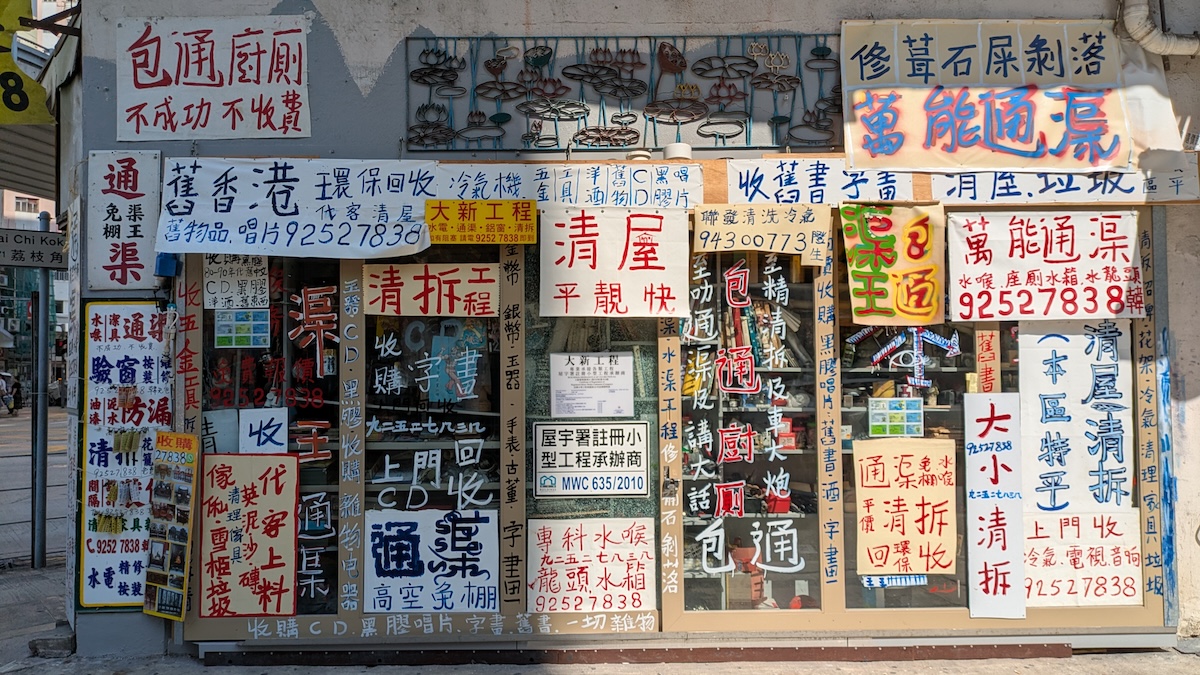
In recent months, there has been growing discussion around tech giants such as Anthropic buying large quantities of second-hand books, scanning them to feed AI models, and then destroying the books. The practice has raised concerns that humanity’s history and culture could gradually disappear.
But out-of-print books are nothing new. AI companies’ destruction of large numbers of books has simply made the issue more visible by provoking public outrage. Apart from the exceptions that remain in print for years, most books naturally go out of print once demand is no longer enough to justify another print run, or when a publishing contract expires. Even without any external factor, the journey from publication to going out of print is simply part of the life cycle of most books.
When I refer to “books” above, I have not specifically said so, but it is clear that I mean physical books. E-books, by contrast, are not constrained by printing and warehousing costs. As long as the files are preserved and the necessary rights remain in place, they can continue to circulate indefinitely, escaping the fate of going out of print.
In other words, setting aside the significance of books as physical artifacts, at least as far as their texts are concerned, digitising and properly preserving physical books that have already disappeared—or are about to disappear—can help safeguard the culture and history carried by their words and images.
With this in mind, I have drawn on the resources of the 3ook.com Library to launch the POOP, Project Out-of-Print, offering free e-book production for publishers, authors and other copyright holders. One book saved is one book saved.
The project is already under way, and a number of out-of-print books have been digitized and republished. If you are an author or copyright holder with out-of-print books that have yet to be digitized, please contact us to take part.
Rather than explaining everything in a long essay, I have put together the following frequently asked questions to help you quickly get the gist of the “Out-of-Print Revival” project.
Q: What is the idea behind Project Out-Of-Print?
Good books should not be forgotten. Let out-of-print books live again, and let ideas keep circulating.
Q: What prompted the project?
- Companies such as Anthropic have bought large quantities of second-hand books to feed AI models, scanning them destructively before destroying them.
- Public libraries collect only a portion of all published books, leaving many works difficult for the public to access once they go out of print.
- Most books naturally enter the out-of-print stage as demand declines.
Q: Who launched the Project Out-Of-Print?
The Project Out-Of-Print project was launched by the 3ook.com Library and is inviting the public to take part.
Q: What is the 3ook.com Library?
The 3ook.com Library is a community-run digital library with a collection of thousands of books from Hong Kong and Taiwan, and the collection continues to grow.
Think of the 3ook.com Library as Netflix for books. Readers can access it through an iPhone, Android app or website. A subscription gives unlimited access, with subscription revenue shared with creators according to reading and listening time.
Q: Do books participating in the Project Out-Of-Print have to be published on 3ook.com?
Not necessarily.
The 3ook.com Library is part of the follow-up infrastructure for the Project Out-Of-Print, but the two are not inherently tied to each other.
Q: Do copyright holders have to publish the books themselves?
They can handle the process themselves, or leave it to 3ook.com.
Q: Will sensitive books be published?
The focus of Project Out-Of-Print is to help copyright holders produce e-books. Whether a book is subsequently published on an e-book store is up to the copyright holder; whether it can be listed is then determined by each e-book store in accordance with local laws and regulations.
Q: Is the project limited to Hong Kong?
Although Hong Kong is indeed a particularly serious case when it comes to out-of-print books, the project is not limited by language or geography. Books in Traditional Chinese are given priority, especially works published in Taiwan and Hong Kong.
Q: Who owns the copyright of the resulting e-books?
Taking part in Project Out-Of-Print does not affect copyright ownership. The original copyright holder retains the copyright to the e-book and is free to use it, including distributing it privately or publishing it on any e-book platform.
Q: I’m an author. Do I need my publisher’s permission to take part in Project Out-Of-Print?
It depends on the specific terms of the publishing contract and whether the contract has expired.
Typical publishing contracts in Taiwan and Hong Kong run for three to five years. If the contract covers an electronic edition, the publisher should be the party participating in Project Out-Of-Print during that period.
Once the contract expires, the publication rights to the text generally revert to the author, while rights relating to editing, typesetting, cover design and so on remain with the publisher. The author can negotiate with the publisher to obtain the relevant rights for use, or have volunteers recreate the work from scratch.
Q: What materials do copyright holders need to provide?
Ideally, you can provide the original digital files, such as Word, InDesign or PDF files, with images supplied separately. The next-best option is to provide a physical copy of the book, which volunteers can use to recreate a digital edition.
If even a physical copy is unavailable, volunteers will do their best to help track one down.
Q: Does it cost anything to take part?
To promote cultural preservation, participation is free. Participants are welcome, however, to decide freely how much they would like to contribute in support.
Q: How can free e-book production be sustained?
- We believe the healthiest model is to keep books in circulation, allowing readers to discover them and support them financially. If you believe in the value of the project, please subscribe to the 3ook.com Library to support Project Out-Of-Print and gain unlimited access to all its works.
- Besides subscribing, if you are willing to contribute your time, please sign up as a volunteer.
Q: Are there any examples?
There are many. Here are just some of them:
- 16 Days Across 12 European Countries|Ma Kwok-ming
- The 00s: The Social Movement Ends, Farming Continues|Leung King-hung
- Silver-Haired Under the Red Umbrella|Yeung Po-hei
- 7,007 Nights: A Lingering Love for Bookstores|Chiu Leung-chun
- North Korea Maze|Pazu
- The Big Event: Reporting on Hong Kong’s WTO|Cheng Yi-yi et al.
- Red-Hot Chicago|Cui Shao-ming
- Ma Man|Ma Man Volunteer Group
- Porcelain 白瓷|Lee Chi-leung (in production)
P.S. For the past two Mid-Autumn Festivals, I have embraced tradition by buying several boxes of mooncakes from “As One, then travelling around the city to deliver them to friends and catch up over a chat. This year, I happened to meet several of the people mentioned above, all of whom are entrepreneurs. I had met some of them last year, while others were reunions after a long time apart. Despite choosing completely different paths, and even holding very different values, we had a lot to talk about. Huddled around mooncakes for warmth, the conversations gave me plenty of insights—and, more importantly, renewed my motivation to keep moving forward.
Leave a Reply